

According to research by Salesforce, 86% of business buyers are more likely to buy if companies understand their goals, and nowhere is that statistic truer than in the nonprofit sector. So, how do you ensure that your sellers are ready to show up the right way for every buyer?
Riley Rogers: Hi, and welcome to the Win/Win Podcast. I’m your host, Riley Rogers. Join us as we dive into changing trends in the workplace and how to navigate them successfully.
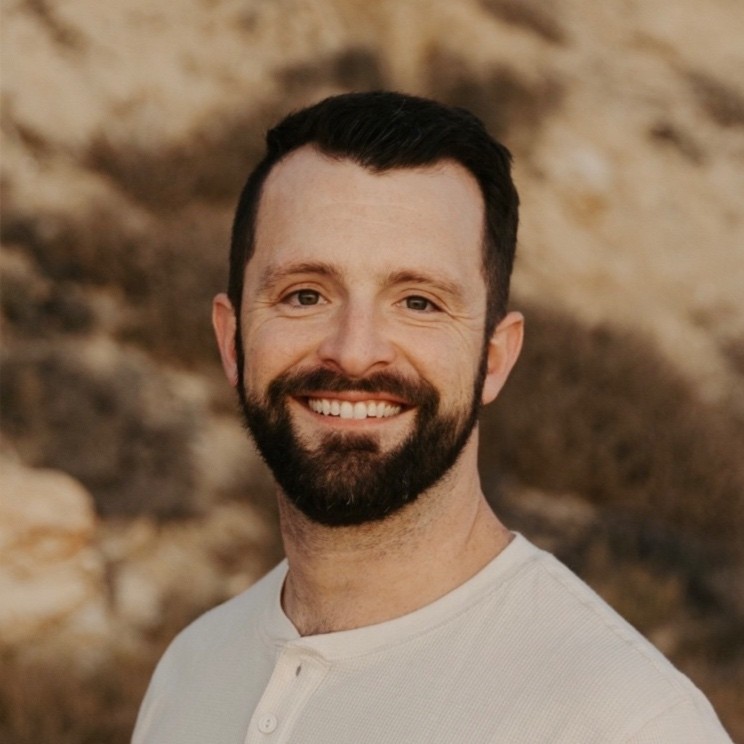
Here to discuss this topic are Carly Foerster, principal enablement manager, and Conner Smith, mid-market account executive at GoFundMe. Conner, Carly, thank you so much for joining us. We’re super excited to have you here today.
As we’re kicking off, I’d love if you could just tell us a little bit about yourself, your background, and your role.
Carly Foerster: First and foremost, I just want to say thank you so much for having us on here. We are honored as always to work with Highspot and to be featured—how exciting for us.
So, my name is Carly Foerster, as you just shared. I am on our revenue enablement team over here at GoFundMe. I’ve actually been here for almost 10 years now, so about a decade of experience with this team, and one fun fact is that I started on the actual sales frontline side at one point way back in the day, which meant that I was working directly with our nonprofit organizations.
I share that because it’s really helped shape how I think about enablement today. I’ve been in that seat. I’ve been where Conner is. I’ve worked and navigated really complex and unique buying cycles here. And what’s really kept me with this team is our mission. It’s this incredible mission to help people help each other, and I also have this incredible opportunity to partner with purpose-driven individuals, just like Conner. You’ve brought the right person on the call here today.
It’s been such a privilege to work with these incredible nonprofits and help drive real impact in this world. And one of my favorite parts is I’m still learning every single day, so I hope that I learn something through this podcast. And with that, the person I’m probably going to learn from is Conner, so I’ll toss it to you.
Conner Smith: Yeah, Riley, thanks so much for having us on. I’m Conner. I’m a mid-market account executive here at GoFundMe, and I sell fundraising software for nonprofits called GoFundMe Pro, which is the artist formerly known as Classy. It’s the entire arm of GoFundMe that specializes in helping nonprofits just raise more for their missions.
I got into sales about four years ago after being a pastor for four years, actually, so I navigated a pretty significant career shift when I went from leading a nonprofit to selling windows, then while I was selling windows, I learned about tech sales and had to go Google what SaaS was and what an SDR was and what an AE was and all those things. I learned and realized, “Okay, I think this is a pretty good path to success and the lifestyle that I’m looking to build.”
So I entered as an SDR back in 2023 and quickly moved into an AE role that I then leveraged just a few months after that to ultimately land a spot here at GoFundMe. And it’s really been a great fit because I know the nonprofit world pretty well, and now I get to meld my nonprofit and sales experience together to really help amplify the impact of nonprofits by giving them the tools they need to, like I said, raise more money for their missions.
The cherry on top? I get to work with and learn from pros like Carly.
RR: You know, I was going to say that was a great introduction to have to follow, and you smashed it. You guys both—those were incredible introductions. I’m super excited to dig into all of this experience that you just kind of high-level skated across. I think there’s a lot to talk about, and I hope a lot to learn.
One thing that you both touched on and that is very apparent throughout both of your career journeys is this shared love for continuous ongoing learning and self-development.
Can you talk to me about where that mindset comes from for you, and then how it shows up in your work? Conner, I’ll toss it to you to start us off.
CS: Yeah. I mean, going back, in my previous role in the nonprofit space, learning was a big part of that. You had to wear a whole lot of different hats, and so learning on the fly was a regular part of the job. I think that’s where it comes from for me.
But then coming into sales from a different background, I didn’t really have a playbook either. I had to learn fast. I had to learn through trial and error, through feedback, and through a whole lot of mess-ups and failure. And I think that mindset really shows up now in really practical ways.
For me, that looks like things like call recordings and listening to those on a regular basis, looking at engagement data, experimenting with different approaches, and not being afraid to fail. You need to be quick to fail.
I had a manager tell me that early on, and I think that was some of the best advice I got. Just get out there and do it. Don’t be afraid of failure because it’s the quickest way to learn.
RR: Yeah, and that’s fantastic advice. And I think you built the learning muscle because you had to, and now it’s stuck, and that’s just how you continually improve over time, so I love to hear that.
Carly, what about you?
CF: Yeah, absolutely. Love learning. We’re big learning fans over here, and Conner, I was going to say, I love that mindset. I think you and I have talked about this, this sentiment of fail fast, fail hard, learn quick, right? That’s a huge part of what we understand as the learning process here.
For me in particular, I’m going to take this on a little bit of a personal journey. So one thing you should know about me is that I have very strong core values personally, one of which is to always be learning. So this is really at the heart and core of who I am as a person.
I’ve always had this real natural curiosity in life. I yearn to do and see and experience everything that I can, and I think it’s that sort of innate drive that makes me want to keep growing, to really have that growth mindset.
A couple things I wanted to share from a sales lens first. Back when I was a rep, one of my biggest learnings, since Conner shared a few, was that if I were to look around and see who was the most successful on the team, what I could tell you is that the most successful people were not always the ones that had the answers right away.
It was often the people who were asking another question, better understanding what they were trying or being asked to do, and then adapting real quick. When I think about our role in enablement now, where that shows up is really how we build our programs. So we focus on the fact that we’re not creating static systems.
We’re not creating one-and-done trainings. We’re trying to create systems that are constantly evolving. We try to. We’re not perfect at it, but that is the end game for us. We’re constantly looking at what’s working, what’s not, how we can iterate. Conner even called out a couple of things. We’re looking at recording data, information from Highspot through reporting and analytics to help inform what that looks like.
RR: Learning doesn’t always have to be external. Sometimes it’s asking that question of yourself every single day, “How can I be that little bit better? What can I do a little bit differently to serve my customers, to serve my nonprofit partners that little bit better?” And I think that is such an important mindset shift to just be open to that question.
On the topic of growth, Carly, you’ve mentioned a couple times that you started your journey at GoFundMe as a seller.
So, having experienced the nonprofit space from both angles, both the sales and the enablement side, what obstacles do you find that your sellers most often encounter now that you are in this place to help them through it?
CF: Great question, Riley, and it’s something we’re thinking about every day, right—how can we overcome barriers and friction in our sales process so that we can better support and serve our customers? I think one of the biggest challenges that I learned very early on as a rep and continue to hone in on as an enablement professional in our specific sector is that we’re a little bit off the beaten path from what it means to be in a traditional sales role.
It’s because we’re not just selling a product, we’re actually partnering with organizations that are deeply mission-driven. They are incredibly thoughtful about every single cent, every single dollar that they invest, and that’s rightfully so, because so many of the nonprofits we work with are supporting critical solutions for some of the biggest problems in this world.
So they have to think about every single dollar that they invest. And so for us, what this sometimes translates into is longer sales cycles, a higher bar for trust. So we are designing our enablement program around those realities.
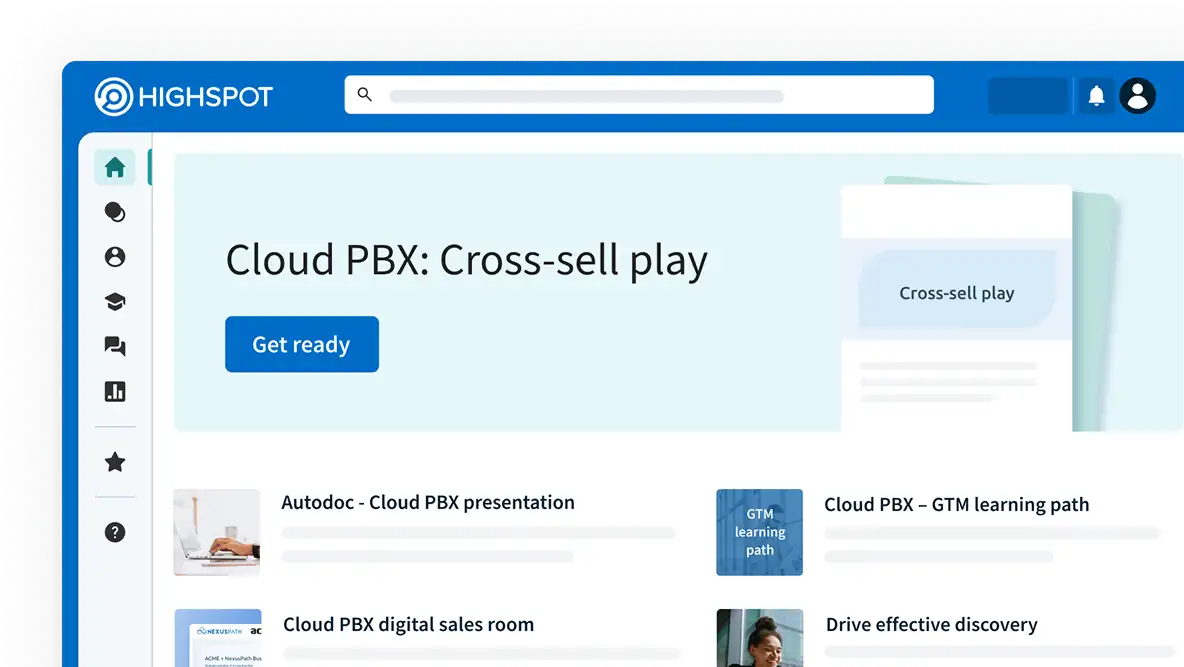
We’re helping reps to tell as clear of a story as possible, to help personalize our outreach at scale, and to use tools like Digital Rooms through Highspot to create this really thoughtful, almost through-line experience during that deal cycle.
At the end of the day, I would almost position it as transitioning from selling to serving. We are here to support nonprofits through this decision to show how we can partner and then to prove ourselves as a partner when they become customers.
RR: You know, I think something that comes through as the through line of all of this, just listening to you both speak about your work and the passion that you have for it, is just how important it is to work for a mission-driven organization. That can inspire you to ask those questions of yourself every day and to improve a little bit so you can be a better partner, and you can be a true partner that helps these incredible organizations deliver real, real impact in the world.
CS: You’re absolutely right. The way Carly and I even first got connected was I was just a couple weeks into my job, and one of the first things she does is like, “Hey, we need somebody to volunteer for the Ronald McDonald House here in San Diego.” And my son stayed at a Ronald McDonald House, or we stayed there while my son was in the hospital shortly after he was born, so it’s a cause that’s near and dear to my heart.
And so that’s how we got connected, was partnering together to raise money for the Ronald McDonald House.
And there are so many people like that in this company. And so it makes it really fun to do work with people that just truly believe in helping people and working with organizations that are out there curing cancer, ending homelessness, making sure there’s no dogs left behind in the shelters.
It’s just incredible work. It really is very, very life-giving.
RR: Working with great people doing great work, that’s kind of the dream. So I love that you guys have it. We’re in such a positive place right now. And now I’m going to shuffle us back to a negative place. So sorry, we’re switching gears here.
Conner, you mentioned that it’s been a little bit of a journey through sales, selling windows to now selling SaaS and so on and so forth.
Knowing that you made that career shift relatively recently and have sold in that time for a handful of different organizations, when you think back to those roles where you didn’t have a platform like Highspot and you didn’t have the support of someone amazing like Carly, what was most difficult for you?
CS: I think probably the hardest part is the disconnectedness, the fragmentation that it was. You don’t really necessarily know where to go to get all the information that you might need to help a customer. And so you’re pulling content from different places. You’re not always sure what’s up to date.
You’re spending a lot of time doing admin work instead of actually engaging with the buyer, with the prospect, and that creates friction. I mean, time kills all deals, and we want to make sure we’re getting right back to them immediately. Their causes are important. They don’t have a lot of time to just be spending looking at software.
They have an important mission that they’re trying to raise money for, and so we don’t want there to be that friction. And in other places I’ve worked, there always was kind of that friction, and not just for the rep, but for the buyer. And so you might send multiple emails, multiple attachments. There’s not really this one clear, concise location to go to get what you need.
And what tools like Highspot solve, and I loved it, and I got it on day one starting here at the company, is it’s not just organization, it’s clarity and it’s consistency, and it lets you focus more on the conversation and less on the logistics. And so that’s made a huge difference in moving our deal cycles along.
RR: So Conner, I know you’re in sales, but I don’t think you needed to sell us that well. That’s everything that we want to hear—that the vision that we’re hoping to deliver is actually showing up in your day-to-day, so that’s fantastic, and I want to dig more into that.
But before we do, Carly, I’d love it if you could give us an overview of the environment that you’ve got going on and that you’ve been building for the last couple years at GoFundMe.
So, today—and this is a crazy number—97% of your reps are using external shares and Digital Rooms in their workflows. I need to reiterate again, that is a crazy number. 97% is near unanimous. So how did you make that motion stick, and what has that changed when you look at how your sellers connect with your partners?
CF: Yeah. Well, all credit goes to me, first and foremost. No, I’m just joking. I actually truly want to put the credit back on our reps. That is our sales team, our customer experience reps, everyone who is frontline working with customers. This is not success that is necessarily an enablement win. It is a win of us collectively, that we have found such an incredible product, and we’re using it in the right ways.
How we got to that number, right? Our success was in how intentional we were in rolling this out.
I would say this is one of our best use cases and how we implemented Digital Rooms with this team. We didn’t just position them as another tool for folks to use. We positioned it as a better way to serve our customers, and for Conner and his work on the sales team, serve our prospects who we are, of course, trying to convince to become customers of ours.
I think practicality is one of the biggest lessons I’ve learned in enablement. It’s not just being theoretical and conceptual. You actually have to make it practical for the team.
So, what that looked like for us is we actually embedded it directly into our sales process. We built templates with key stakeholders on our team—Conner would be an example of one of those key stakeholders—we had other voices contribute to what these Digital Rooms would look like, how we would use them, and then we made it extremely easy to adopt. And once reps started to see that they could replace multiple follow-ups, those emails with 50 links in them that we’re hoping and expecting people to click on, right?
You put it all in one single source that looks beautiful, it’s clean, it’s curated, it’s dynamic, and actually see how the buyers were engaging with that content. The light bulbs went on for everyone pretty quickly of how powerful this could be. And I want to spotlight Digital Rooms in particular for our handoff process, from when our sales team brings on a new customer, we’re all excited, we celebrate together, and then we try and create the most seamless handoff to their onboarding experience and on into their work with our customer experience teams.
We actually created a series of Digital Rooms specifically for the onboarding pathways so that a rep like Conner would simply have to go in, find the right template, do a couple little customizations, but he already had the package to send to a customer, which we knew were the exact steps they need to take to be successful in those critical first three weeks, four weeks with us.
It has been truly a joint partnership, a collaborative effort to get these up off the ground and to see results like 97%.
RR: There’s kind of two components to it, which was make it easy, make it accessible, and then the second piece is kind of that classic enablement foundation of make it matter, make it meaningful.
And back to the point of great people doing great work, you have a team of folks that just want to make life easier for their partners, and you’ve given them a tool to do so. Why wouldn’t they adopt it? That all makes perfect sense, and I mean, you can see it in the results that it’s working.
CF: It’s working. I mean, even Conner spoke about the fact that we work with customers who just don’t simply have the time in their day to take minutes, even minutes, to go read through an email and try and find the right information. So if we can package that in the right way, it’s saving time for them to dedicate back towards their programs and mission, which is a win in our book.
RR: Yeah, and that’s exactly how you show up as a trusted partner. You have exactly what you need. I’ve given it to you. Now go run, do what you need to do.
Conner, I would love if you could walk us through how this shows up in your day-to-day. So how are you using Digital Rooms, external shares, and how is that helping you manage deals, manage conversations, take next steps?
CS: I mean, first of all, I just use this literally every single day. I built a Digital Room today for a pretty high-value prospect. We had a first call. We scheduled a second call. There’s a great fit. We are going to meet quite a few different needs actually and help them move from having multiple platforms to having one platform.
And so there’s a lot of different components to it, and so I wanted them to have a very singular place to go so they can get everything. So kind of the way my process works is the moment I get off a call, I’m getting my call readout, I’m starting to work on a follow-up email. And if it’s a larger, more complex deal like the one today looks like it’s probably going to be in the best possible way, I’m opening up that integration with Highspot right there from my email.
I’m beginning to build or edit a Digital Room that I call an evaluation hub to my prospects. If it’s more of a simple deal, then I’m at least using the external share feature to highlight some of the items they specifically requested. Maybe that’s a one-pager, a quick case study, or something like that.
And so that’s kind of how I’m using that in the day-to-day. And then on top of that, it’s also like what Carly just said, it is literally baked into our sales process.
There’s no option to not send a Digital Room when it comes to the onboarding process. That is how we onboard our clients, with a Digital Room, and it has been tremendously helpful because they know where to go back to time and time again. And sometimes even months later, they know exactly where to go to get some of the resources they need to be successful with our product.
Beyond that, though, I’m also using those metrics of especially those pre-sales evaluation hubs to look at the metrics as to whether they looked at those resources and how often they’ve looked at them in order to help inform where they’re at in the decision-making process of the deal, which really helps then with my forecasting and helps me look good to my managers.
RR: Do you have an example of a deal where looking at that engagement data really helped you take the right next step?
CS: I’m not thinking of a specific deal. I use it pretty consistently, though, just to see are they seriously looking at us? Because if they’re not in the room, then it’s pretty easy for me to tell my manager, “Hey, this might happen maybe. They haven’t poked around in here, or they looked at it once and that was it.”
As opposed to another deal where I see that they’re looking at it, they’re sharing it internally. I’ve got five or six different individuals opening up this room. Well, now I know that multiple stakeholders are involved.
When I go into that forecasting meeting, I have a lot more ammo to say, “There’s some real likelihood that this is moving forward. There’s some genuine interest in our platform.”
RR: Yeah. That makes 100% sense. So it really does seem like from pre-sales evaluation hub all the way through to the onboarding process, you’ve found the recipe to success. Carly, one thing that you’ve shared in the past, I know you’ve spoken about this a number of times, is that your priority is to, A, help reps be successful but, B, help them be the best partner possible.
So how do you ensure that that’s happening? How do you measure that, and what signals are you looking at to make sure that that’s the case?
CF: I’d say for any enablement program, that is one of the strategic pillars you should be aiming for, is how do we ensure that the maximum amount of people on our team have a clear pathway to success?
I want to start off by saying we are not perfect. In fact, we would never aim to be perfect. The goal is continuous improvement. And to your question of how we’re measuring that, broad strokes, I’d look at two things. It is rep confidence and business impact. So on the rep side, what we’re looking at, metrics we can track, adoption, like you said, 97%, really easy to get there if you’re baking it into the sales process.
Like Conner said, not a single deal goes through without using a Digital Room, so that’s an easy way to get adoption up. We’re looking at ramp time for when a new hire comes on board to when they see their first bits of success, what that ramp looks like, productivity. On the business side, we’re looking at things like deal progression, so stage conversions, win rates.
But what I would say is even more, personally, even more important than those quantitative stats is the qualitative signal. So we’re looking at things like, do our reps feel confident in what they’re doing? Let me talk to a couple reps and let’s just get a general sentiment because if reps aren’t confident, we are not going to move through stages the right way.
And even beyond that, we’re looking at are they spending more time with customers, less time searching for content? That’s more specific to Highspot, right? So Conner called out, when he first started working here, just the speed at which he was able to get access to content compared to maybe his previous roles he had been in helps him to focus more time where it matters most, which is right in front of nonprofits.
So when rep confidence is trending in the right direction, when we see those quantitative stats trending in the right direction, we know we’re on the right path.
CS: One more little piece to that is, to give the comparison, I was so trained that if I had a question prior to my role at GoFundMe, what you do if you have a question is you go to Slack and you ping somebody, or you put it in a group channel.
And then I cannot tell you the number of times Carly would pop in there and be like, “Have you checked Highspot?” Or, “Here’s the Highspot link.” And so it’s just over and over and over again. And so now I’ve been retrained. I still do it some. I’m still a little annoying in Slack, but I’ve been retrained now.
CF: There is one of the greatest successes I always love, putting like a #self-enable, right? We love that. We want to build that muscle so folks know where to go and to find those answers quickly, Highspot being our main source for it.
RR: I actually really like that, #self-enable. And like we talked about at the very start, learning, growth, these are the things that happen, and that’s okay.
As we’re getting to the end of this, we’ve heard a little bit about the story, the levers you’re pulling, how it’s working out for you. I’d like to dig into the successes. So Carly, looking across this partnership so far, and I know it’s been kind of a long journey so far, but what are the most meaningful results you’ve seen with Highspot? Are there any key wins that you’re super proud of?
CF: Yeah, so many. It’s been such a wonderful partnership, so really big thanks to you and your team. Of some of the most meaningful results, what I’ll call out is efficiency and consistency. And again, we are not perfect. We are constantly building and growing and making this better and better.
But as Conner has noted a few times from that rep perspective, it’s the ability to quickly get to the content that he needs in order to better serve nonprofits. So when we first moved over to Highspot, one of the things we track and continue to track is that ratio of how long it takes for someone to find a piece of content to how long they actually spend on that piece of content, right?
So things like searchability ratios, findability ratios. We’re constantly checking in on those to make sure that we are surfacing the right content in the right moment at the right time so that reps can immediately get access to what they need to. We’ve seen strong adoption. I have to give credit back to the reps again for being incredible partners with us, to let us know what they need so that we can better build programs that work for them.
There’s still so much to do, but we are seeing really meaningful progress that is ultimately helping us better serve nonprofits.
CS: From the field perspective, the biggest impact is just confidence and clarity. I know I’m sending the right content at the right time to the right person in the right way.
It’s right. And so the engagement data, I mean, that gives me a huge advantage. It helps me prioritize deals, tailor my follow-ups. I’m ultimately able to just move opportunities forward more effectively.
RR: Thinking about everything we’ve talked about, all of the benefits you guys are seeing, the way that you’re using Digital Rooms, the way that you’re engaging your buyers and delivering really strong experiences that communicate true partnership.
If there’s one shift that other go-to-market teams could make this year to better serve their buyers, what would it be? And I’ll just toss that out. Whoever wants to start, feel free.
CF: Well, first thing I’ll say is I’m not an expert, right? So this is just my own opinion, my own observations from the specific space that we work in. You could find, I’m sure, 100 different answers just by Googling this.
What I would say is a really important shift, and this is something that I’m thankful we’ve been pretty well aware of since I started over 100 years ago at this organization, but we have to recognize that we need to design our sales process around how buyers actually want to buy.
And I know that sounds so simple and, of course, so plain and easy, but it’s so surprising, and I think this is a long-standing sales mindset and journey, is we’ve always been the one to lead people through this evaluation process, and you need to fit into our sales process.
And really what we’ve recognized, especially in the past decade, probably even longer than that, and especially with working with nonprofits, is that it is our job to make things as simple as possible for buyers to understand, to trust us, and to ultimately say yes and align to the way that they need to make that decision.
We looked at tools like Highspot to help us create this frictionless process that aligns to how our buyers want to buy so that we both can find success together. And Conner, I’ll toss to you at that point.
CS: No, I agree. Kind of going back to something you said earlier, Carly, I think it is a little bit different than your typical sales role in the fact that who we’re selling to, and I think this is the case in all sales roles, but definitely in this world, is don’t take shortcuts.
I think if there’s one big shift go-to-market teams should make, you were talking about, I think that’s it. Don’t take shortcuts. People in general, all people, but I feel like people in the nonprofit space, they’re just a unique group of people. They’re in this particular line of work because they’re driven by something different.
So they have different hardwiring. And so people in general, but especially that group, can feel the difference between a mass marketing campaign and genuine personalized outreach. So I heard recently this quote of, personalization at scale, it’s an oxymoron. It’s better to go deep on a handful of strategic accounts and get to know them and show them that you know them than it is to just spam someone with what you think they need.
So get to know your prospects. Make sure that your outreach reflects that you know them. You know something about their organization, what they do, who they help. Nobody wants to feel like they’re getting sold to, and I think that’s especially true, again, in the nonprofit space. Many are in this line of work because they want to feel connected to the people that they’re serving, and the same goes with the people who are selling to them.
RR: You each gave us two slants of kind of the same concept, which is at a broader level, you need to serve your buyers in the way that they want to be sold to, whether that’s process or whether that’s individual conversation level, speaking to a person like a person. So I think that’s both great advice, but I know we are kind of at the end of our time.
So Carly, Conner, thank you so much for joining us. It’s been really wonderful to catch up and hear a little bit about your world.
CF: Yeah. Thank you so much for having us. It is fun to join in on conversations like these, and hopefully you learned something. I already learned something from Conner, so here we go.
CS: Yeah. It’s fun. Always be learning. ABL.RR: Perfect. To our audience, thank you for listening to this episode of the Win/Win Podcast. Be sure to tune in next time for more insights on how you can maximize go-to-market success with Highspot.