The go-to-market performance gap
Close the GTM performance gap by turning AI into consistent execution
About the research
Perception and reality are pulling apart
Most teams look mature on paper, but the performance data tells another story.
Perception
98% of leaders believe execution is standardized.
Reality
Only 53% report highly consistent outcomes.
The gap shows up where work happens
AI is scaling what already exists
AI is moving faster
76% recognize that AI adoption is moving faster than their organization can support.
Readiness changes the outcome
AI works when workflows, signals, and coaching are connected.
Consistency makes AI useful
AI drives impact when it reinforces how teams should execute.
Key findings for go-to-market leaders
The gap is no longer whether strategy exists. It is whether teams can execute consistently across regions, roles, and deals. AI raises the stakes because it scales whatever system is already in place.
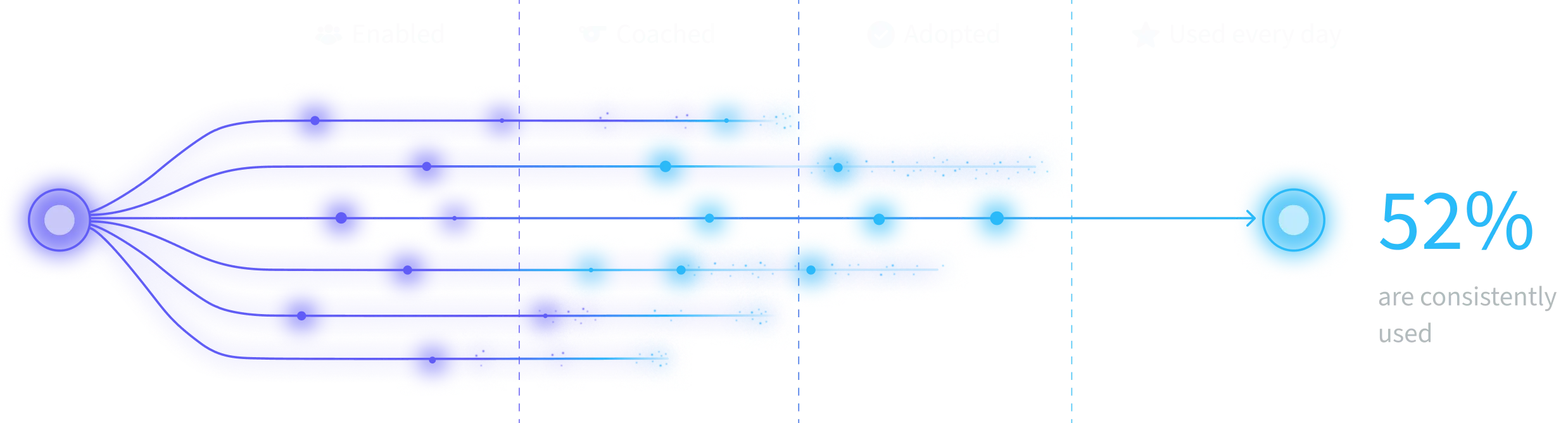
Finding #1
GTM initiatives are not sticking
Finding #2
Maturity shows what to fix before AI drives impact
Finding #3
Consistency is the growth lever
The teams pulling ahead are not adding more tools. They are making the right way to work easier to repeat.
potential revenue impact for a $1B business
See the gap from your seat

CMOs

CROs

Enablement leaders

RevOps
Your market has its own gap

Financial services

Healthcare and life sciences

MedTech

SaaS and technology

Manufacturing
Pressure-test your GTM execution
Rate each statement below based on how true it is for your organization today. Your answers will help identify your biggest GTM gap and one practical next step.
Pressure-test your GTM execution
Rate each statement below based on how true it is for your organization today. Your answers will help identify your biggest GTM gap and one practical next step.
Rate each item:
We can clearly connect strategic priorities to day-to-day seller and manager behaviors.
Our teams can easily access the guidance, content, and insights they need to advance deals.
Coaching is delivered consistently across teams and is tied to measurable performance improvements.
AI and performance insights help our teams take better action, not just generate more information.
When we launch a GTM initiative, adoption is consistent across teams and regions.
Recommended content
Stop mistaking activity for execution
Download the report to see where GTM maturity breaks down, why AI raises the stakes, and how consistent execution can unlock measurable revenue upside.
Download report