
According to research by Gartner, 84% of business leaders report their company’s identity must significantly change to achieve strategic objectives. But how do you know when the time is right? And more importantly, how do you ensure that change goes smoothly?
Riley Rogers: Welcome to the Win/Win Podcast. I’m your host, Riley Rogers. Join us as we dive into changing trends in the workplace and how to navigate them successfully. According to research by Gartner, 84% of business leaders report their company’s identity must significantly change to achieve strategic objectives.
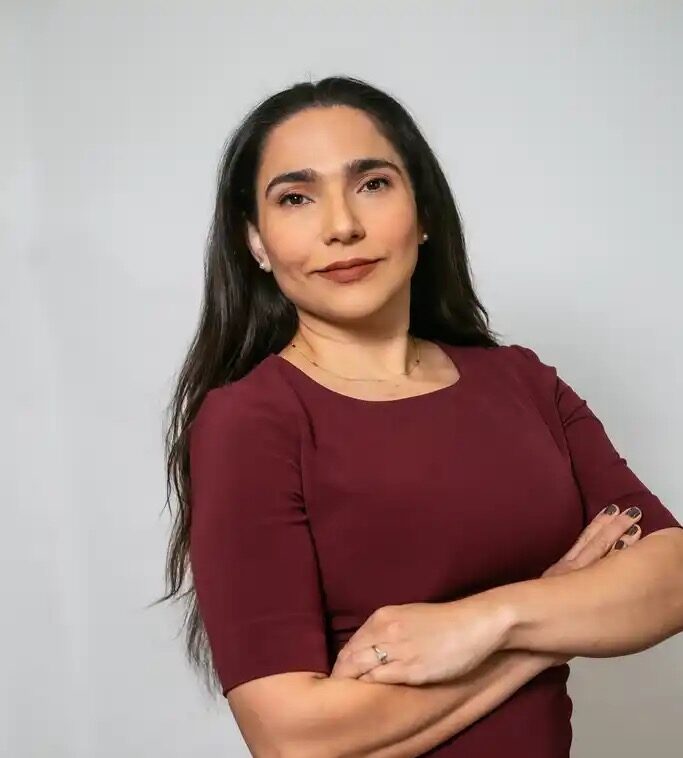
But how do you know when the time is right? And more than that, how do you ensure that the change goes smoothly? Here to discuss this topic is Shelly Luciano, Vice President of Strategy and Operations at Leah. Thank you so much for joining us today, Shelly. I’d love if you could just kick us off by telling us a little bit about yourself, your background, and your role.
Shelly Luciano: I’m Shelly Luciano. I’m Brazilian. I studied industrial engineering in Brazil and France. I started my career working in infrastructure and R&D, so that experience gave me a strong foundation in execution early on. Back in 2014, I moved to the UK to pursue my MBA at London Business School. I used business school to transition from a technical background into strategy on a global scale.
After my MBA, I spent three and a half years in strategy consulting. That work helped me learn how companies compete in larger markets. What I realized is that although strategy consulting is intellectually fascinating, I was being more and more drawn to the business.
So I transitioned into tech about five years ago. I joined what was then ContractPodAI, which is now Leah. Today, I’m Vice President of Strategy and Operations. My team focuses on aligning strategic priorities, supporting cross-functional execution, and ensuring our go-to-market approach reflects both where the company’s headed and what our customers need.
One of the most valuable parts of my role is staying close to our customer base. These conversations give me and the company a lot of valuable insight into how the market is evolving and how organizations are actually adopting AI. I then bring these insights back into the organization, back into Leah, to inform product direction, enable our customer success team, and ensure that our strategy remains grounded in real market needs.
Ultimately, my role sits at the intersection of strategy, go-to-market execution, and customer insight.
RR: I think you have a fascinating role, to be quite frank, and also a really wonderful story. To go from “I’m trained as an engineer,” to “now I’ve got my MBA, I’m in consulting, and today I work in tech and have for the last five years,” that’s really an incredible journey that I imagine must have given you a real wealth of experience that serves you very well at Leah.
SL: It’s funny because if you asked me when I graduated in Brazil what I’d be doing now, I wouldn’t have guessed. The world has changed so much. My world has changed so much. So I feel very lucky and blessed to do the job that I do. I really like it. My company’s fascinating. My role is fascinating. My company gives me room to change as long as I’m adding value and my team is adding value. So I’m really happy.
RR: Yeah, and that’s certainly evidenced by the fact that you spent five years in one tech company when the average tenure is just over two, so something really must be going right.
I’d love to dig a little bit deeper into this exciting, challenging, and evolving role that’s been keeping you at Leah for the last few years. You’re there to keep an eye on what’s happening in the market so your reps can tell a story and your engineering teams can build a product that the market both wants to hear and to see.
More than that, you’re also there to break down silos and operationalize your strategy so it really shows up in everyday workflows. In this work, what kind of things tend to crop up—challenges or obstacles that make it difficult to build the connections that bridge that gap between strategy and execution?
SL: For me, there are two major challenges I see in equipping internal teams to drive growth.
First, strategy and execution often evolve at different speeds. A leadership team can align relatively quickly on a strategic direction, but translating that direction into how hundreds or thousands of people operate day to day can take much longer.
For me, strategy only really lands when it keeps showing up in customer conversations. What you portray needs to align with what your client base and the market are seeing. If the people talking to customers every day don’t understand the problems that your company is solving and why, then your strategy hasn’t really landed. It’s just a deck. It’s lovely to build these ideas, but you’ve got to be able to execute on them.
As companies scale, the complexity increases much faster than people expect. You have more industries, more personas, a larger product portfolio, and if you don’t have the right systems and alignment, that complexity can create a lot of confusion internally.
And if your team is internally confused, then everyone else is too.
RR: So your job is to keep an incredibly close pulse on the market and on technology as they both evolve. And it’s a little bit of an endless task because the market will always shift and technology will always evolve. So you’ve got to be right there with it as the voice of reason for the organization, telling everyone, “Okay, here’s what’s happening, and here’s how we’re going to move with it.”
As someone who, by job description, is very comfortable with change and evolution, can you share with us how you’re thinking about how Leah, as an AI-first company, is keeping pace through major technology shifts, and then how other organizations should think about translating these shifts into their own organizational and operational processes?
SL: Leah has been an AI-first company for years, way before LLMs. What changed with LLMs is the speed and scope at which we can execute our strategy much faster.
We’ve been using machine learning in our platform for a long time, so the foundation was already there. We already had a really strong team.
What LLMs did was introduce a step change, and our founder, Sarvarth, is a visionary. He saw straight away how that was going to change the game.
All these changes in the past few years did not change our direction, but for the client base, what they can really see is that LLMs have expanded the use cases that we can deliver. And I think that’s what matters to customers—how can we solve more of their problems?
With Leah, we’ve moved from traditional automation into what we describe as an agentic operating system. That means our AI is not just supporting workflows. We can do much more than that.
We can now reason across data, understand context, and orchestrate actions. That is so exciting, as you can imagine, for someone who works in strategy because it feels limitless.
Going beyond static workflows, you now have systems that can adapt dynamically to the problems that we’re solving. And that’s where the speed and pace of innovation really comes in.
Once you move into an agentic model, you’re no longer limited to predefined use cases. You can continuously expand how AI is applied across not only our internal organization but also our client base.
From a strategy and operations perspective, the challenge is not adopting the technology, because we’ve been able to do it and we continue to do it. The challenge is how do we operationalize it?
Strategists love frameworks, so if I had to group it, I’d say there are three ways I think about this.
The first part is strategic focus. The risk with AI, within all this opportunity, is diffusion. So we need to be deliberate about which use cases we prioritize. We need to define where we can deliver the most value, because being AI-first doesn’t mean doing everything. It means scaling the right use cases.
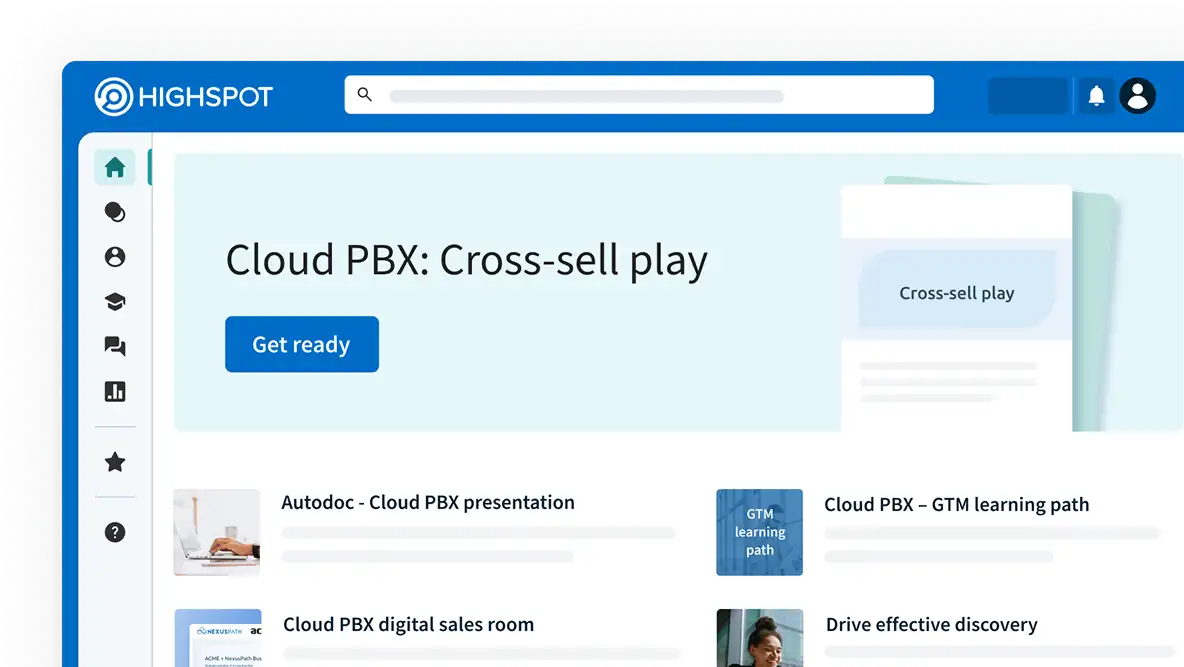
The second part is how do we translate that into go-to-market execution? As I mentioned before, strategy only really lands when your customers can speak about you. Organizations need to understand how to position AI. We need to be able to explain it clearly so we can apply it across different industries and contexts. That’s where systems like Highspot can really help us translate this within our organization and externally.
The third thing is continuous customer feedback loops, because customer proximity is the most valuable strategic signal we can have.
To be a strategist in tech, your goal is not to define a static AI strategy. You’re always on a feedback loop, and you need to be agile. The tools and teams that support you need to be comfortable with always learning and always putting our best foot forward.
RR: So as you alluded to, you and the team actually recently went through a rebrand. From ContractPodAI, you became Leah, named after the organization’s flagship AI offering.
I’d be curious to hear how, with these challenges to strategy-aligned execution in mind, you and the team made sure that everyone was telling the same story and supporting the same strategy, even as the brand message and narrative shifted so drastically.
SL: Leah was already a product of ours that had taken a bigger and bigger piece of our client base.
So moving from ContractPodAI, which was very contract-focused, into Leah made sense because the Leah product had become a much bigger part of who we were and our identity.
When we came into becoming the Leah brand, we were ready in many ways. You’re never fully ready for a full rebrand. There’s still a lot of work. But we had the tools and processes in place to help us in that transition.
In 2021, we had just raised $150 million from SoftBank’s Vision Fund. At that point, I knew we were going to grow exponentially, so I wanted to manage as many growing pains as possible.
At that stage, we were evolving from having a relatively general pitch to a much more sophisticated message tailored by industry and persona, and our platform was expanding even back then.
I realized that we needed a way to ensure that our entire organization stayed aligned on how we communicate value because, as companies scale, complexity increases. More products, more industries, more ways customers can use your platform.
So when trying to solve that problem, that’s when we looked into Highspot.
We wanted Highspot to help us ensure the entire organization could work from the same narrative.
Highspot is now used across our sales teams, SDR teams, CX teams, and actually it has expanded because once people hear about it, they want to know what the go-to-market teams are presenting.
I’m really glad we implemented Highspot four or five years ago now because since then the customers that we serve have grown and the breadth of our platform has grown.
Putting things in place before you come to that stage is actually really important.
RR: Can you walk through where Highspot fit into the picture and how you and the team used it to trickle down that message so, to your earlier point, strategic vision didn’t get lost in that wonderful game of telephone between C-suite strategy and individual contributor execution?
SL: When I came in, we had a general pitch on how we went to market.
One of the reasons I was hired is because I came in to do an industry strategy, and there was a lot of research involved—both internally, looking at how we were using the tool for certain industries, and externally, looking at market potential and product fit for each industry.
Based on that, I prioritized a few industries to start developing content and enablement around.
That’s when I looked into Highspot because we had a SharePoint at the time, and it was already not fully updated. People pasted things on top of it or saved materials to their computers and never checked the right version again.
I came to Highspot with a very clear use case. There were other features and capabilities that we wanted, but the core problem I wanted to solve was creating one single source of truth.
It seems like a SharePoint should do that just fine, but it didn’t because we needed something that would help us as we continued scaling product growth, use case growth, and overall organizational growth.
It was going to become really hard to enable everyone and make sure people accessed the information they needed at the right time.
That’s what we got Highspot for, and that’s what we continue using it for.
RR: So once you defined the strategy of the rebrand, where did you see friction between what you were telling reps—“Here’s our new message, here’s our new strategy”—and what they were actually saying and doing in the field?
Where was there misalignment, and how did you and the team tackle that?
SL: Once the strategy and story are defined, the real challenge is behavioral change at scale.
Organizations tend to align on a narrative relatively quickly at a conceptual level. But alignment alone is not the end goal. Execution is.
Execution, particularly in customer conversations, can take time.
The friction I’ve observed is not usually resistance. It’s normally a knowledge gap or a confidence gap. Sometimes you have the knowledge, but you’re not confident in that knowledge.
As your platform evolves and you’re no longer selling a single product for a very defined use case, you’re helping customers on a journey. You need to understand a variety of challenges across different workflows, industries, and personas.
In that environment, the challenge is not whether teams understand the narrative. The bigger challenge is whether they can apply it dynamically in real conversations.
What we consistently see is that reps are comfortable with the core story, but uncertainty appears around the edges. When a customer asks something slightly outside the standard pitch or challenges how the solution applies to their specific context, that’s where execution can break down.
For reps to feel confident using the right language and positioning the platform correctly, they need to understand things at a deeper level.
With all the advancement in AI, we can develop things so quickly, but that also creates challenges because emerging technologies move incredibly fast. There’s something new every week.
If your software can deliver so much, there are a lot of questions reps need to feel prepared for, and we need to give the organization the ability to operate with clarity and confidence in this complex environment.
Highspot has helped us do part of that, particularly in making sure teams understand how we’re positioning ourselves, but there’s also a lot of technical enablement and training that we need to make sure they complete.
Teams have to prepare for conversations in many different contexts, and that fundamentally changes how an organization executes.
You can’t just memorize anymore. You need to understand.
Ultimately, scaling a company is not about having the best strategy on paper. It’s about ensuring that all of your employees can bring that strategy to life and communicate it with passion.
RR: Yeah. I love the way you landed that because you’re 100% right that to a certain extent it can be a knowledge gap, and another layer can be that confidence gap.
But then that third and final layer is the context gap. Can reps embody the strategist? Can they embody the strategy?
Reps want to do well. It benefits them and it benefits you. So when things are going awry, it’s not intentional.
It’s hard to get up to speed and start delivering in the field, especially when things are changing so rapidly.
If you can slowly bridge all those gaps, your strategy starts to encompass the whole company.
And again, it’s such a cool role that you have, getting to bring that to life and then watch it trickle out into every customer conversation your teams are having.
You mentioned 2021 and implementing Highspot, and it’s been five years since then. In that time, what key results have you seen? Any wins that you’re especially proud of, whether early on or today during this rebrand phase?
SL: Highspot is now widely used across the organization.
We have the sales team, SDR team, CX team, and leadership all using it.
Initially, we bought licenses only for the sales team, and since then we’ve more than doubled, if not tripled, our licenses because people continue asking for access.
I think that’s one of the biggest indicators of value.
What I continue to see, and why I continue investing in the platform, is consistency. You want to be consistently delivering and positioning yourself in the market.
As our product offering expanded and we began serving multiple industries and personas across different regions, it became critical that teams could access the most relevant materials quickly.
Highspot ensures that everyone across the organization is working from the same narrative and delivering a consistent experience to customers and prospective customers.
That alignment becomes very important as the organization scales.
One of the most impressive things after the rebrand was that from the very next day, everything had changed. Everything in Highspot was Leah.
I knew the marketing team had been working incredibly hard, but from day one everything was available to us.
That’s what tools are for. When you buy a tool, you want to make sure it makes you look good.
RR: I can imagine that’s a monumental task—to take every single piece of collateral, every single deck you’ve ever built, and overnight update it so every rep has all the content, messaging, and everything they need to hit the ground running on day one of the rebrand, day one of Leah.
To the point of bringing strategy to life, you really did it.
Very early on, you said you’re never ready for a rebrand. And yes, it’s certainly a huge task, but it does seem like you’ve come through it successfully.
That takes me to the last question I had for you, which is: for other leaders navigating a rebrand or shifting message while trying to position themselves in a constantly changing market, what advice would you share?
SL: One of the most important lessons for me is that rebrands are not simply marketing exercises. They’re full organizational transformations.
The success of a rebrand depends on whether the entire organization is bought in and understands the narrative, and whether they feel confident communicating what you’re doing to customers.
Like I said before, the success of the rebrand is really only clear when you see that it has landed with your customer base.
Another key element is staying very close to your customers during the process. Understand how they’re going to perceive this, and once you’ve launched it, pay attention to their initial reactions so you can address anything quickly.
That’s your most valuable insight because customers really know how you’re positioning yourself in the market and what you can actually deliver.
You want to make sure what you’ve changed feels true to who you are.
Luckily, with Leah, customers responded positively to the rebrand. They felt the narrative resonated.
When your organization combines strong strategic direction with customer insight, you’re much more likely to build a story that’s authentic and compelling.
That’s what you want with your brand. It needs to make sense. People need to know it wasn’t just done to look good. It needs to resonate with the company and what you’re offering.
RR: Yeah. You absolutely need to prove that this is something worthwhile and valuable to your customer base, and that it tells the story and provides the value they’re looking for.
Otherwise, to your point, it winds up feeling like a vanity exercise because someone didn’t like the colors or didn’t feel the name was quite right.
It needs to be strategic and feel strategic.
Shelly, thank you so much for joining us today. It has been an absolute pleasure talking with you and learning more about the work that you’re doing at Leah.
To our audience, thank you so much for listening to this episode of the Win/Win Podcast. Be sure to tune in next time for more insight on how you can maximize go-to-market success with Highspot.