

According to the State of Sales Enablement Report, 2025, 29% of companies still rely on multiple disconnected GTM tools. So how can organizations leverage a unified platform to scale sales readiness and achieve GTM success?
Riley Rogers: Hi, and welcome to the Win/Win Podcast. I’m your host, Riley Rogers. Join us as we dive into changing trends in the workplace and how to navigate them successfully.
Here to discuss this topic is Heather Hubner, advisor distribution and agent relations at Priority Health. Thank you so much for joining us, Heather! I’d love it if you could just start by telling us a little bit about yourself, your background, and your role.
Heather Hubner: Thanks for having me, Riley. Again, my name is Heather Hubner, and my role is a somewhat newer role in our company, but I came from the employee benefits side of the industry and then moved into sales.
So I was a sales rep for several years for priority Health and that has evolved into the distribution side. Really my role is to ensure that our agent partners have a very aligned message as far as our products go, and just ensure that we are giving them the tools they need to represent our product in the field appropriately.
RR: I kind of wanna double click into something you mentioned, which is that you started on the sales side of the house at Priority Health. So with that background in mind, can you walk us through some of the unique challenges that reps in the healthcare industry face, and then maybe a little bit about how enablement can help them overcome those things?
HH: Yes, and I love this question. Being a sales rep in this industry—I think anyone who has worked in it understands the complexity—-is complex, it is fast paced, it’s somewhat seasonal, but we’re also learning that those seasons are no longer such. It’s just a high pace all year round.
As a rep, one thing that I really learned was we have time wasters: we’re looking for a certain material that an agent wants, we’re reeducating ourselves on a product because maybe it’s something that we don’t delve into on a regular basis, we just need to reeducate ourselves as a rep.
Before Highspot, so much time was spent digging around for that information and therefore less time was spent selling and building relationships and building trust with the agents.
That was, that was very challenging. You know, I always thought: “Goodness, if I had everything at my fingertips, frankly, I could sell more for our company because I would be spending my time in a valuable way.”
So I would say about four years ago, that’s when we first started using Highspot and it was an absolute game changer. I mean, it changed our world. We could get everything in one spot, and there was a lot of emphasis on making sure we had a source of truth.
Reps know they know to go to Highspot, they can grab what they need when they need it, send it to an agent, reeducate themselves, and there isn’t any more guessing about where to look at our system, which drive, how do we find out who has the most up-to-date information.
It really has been an amazing alignment tool.
RR: I love that you’ve walked the walk so much so that you’re like: “I know what was hard, and I can now have the agency and also the tooling to go in and fix it.” I think that’s wonderful. And I think that’s always the goal of enablement, right? But when you have that background, you’re so much more in touch with what your reps need.
So now that you’ve kind of made your way into this new role, I’d like to dig into what you’re working on now. So, what are some of those key initiatives that you’re focused on driving for the business this year? How are you hoping to decrease complexity like we just talked about for Priority Health’s reps and agency partners?
HH: To give you an idea of our journey so far, we started using Highspot for our reps and really went hard this year on ensuring that we had similar tools for our agents creating pages, specifically for our agents by market segment. We have created digital pages, so to speak. We call them engagement pages from an externally facing standpoint, and we have tailored the tools that those agents specifically need.
This is important because, you know, if you are a small group agent, you generally don’t have all the complexities that large groups have, and therefore you don’t wanna weed through all those materials.
So it really is the same principle applies, right? It’s giving them the tools they need when they need it, without having to sift through a lot of things that they don’t need. So creating very tailored pages for them has been really important.
We’re going to take it a step further this year. So, to get to your actual question, we’re gonna focus on training. So when we get new agents in the field, they are the ones that we count on in order to sell our product, and oftentimes they are getting in the trenches, learning about all the carriers all at the same time. It’s a lot to digest.
What we are gonna focus on is working on our training and our onboarding experience for our agent partners, and that way they can get in the field quicker with the right type of information, stay compliant with what our product actually is offering, and feel more comfortable.
The hope there is truly we’re gonna sell more, more quickly, and they’re going to feel more comfortable repping our product.
RR: I love the kind of internal enablement philosophies that are being extended out to the partner network—we know what you need and we want to give it to you in an easy, digestible way that is tailored to your workflow, because I’m not going to make you dig for something that you don’t even need.
Keeping that in mind, I’d love to know what some of those other key building blocks for effectively equipping agents and building strong partner relationships are for you.
HH: Gosh, the biggest piece is trust, right? They’re building trust, um, spending time with them. Listening. Listening is the biggest piece. When agents are telling us things, we have to listen to them and act upon them.
Otherwise what’s the point? The fact of the matter is in our industry—and anyone that works in health insurance knows our agent—partners are very direct. Sometimes too direct, but they’re very direct. So when they’re telling you something, they mean it and they are going to be truthful because their livelihood is also reliant upon the information we give.
But I would say relationships are the strongest one. Trust, transparency. You know, being honest. If we are, you know, if an agent questions us on something, or frankly, sometimes they’ll compare us to other carriers: “Hey, this carrier does this. How come you guys can’t do that?” Be honest about it.
But it really goes back to listening and forming those bonds to where they trust you. Because the more an agent trusts you, the more willing they are to say: “Hey, this group is a really good fit for your product. And I feel confident that you’re going to onboard them smoothly. I feel confident you’re going to take care of them from a customer service standpoint. And I feel confident that when there’s a problem, I’m going to call you, you’re gonna answer and you’re gonna help me solve it.”
RR: So, you mentioned listening and building trust and transparency, and then using what agents are saying to kind of build your programs and how you support them. How are you kind of creating these channels to get in touch with your agents? Is it just getting on the phone and talking to people and then taking that information back to your strategy? How are you kind of creating that feedback loop?
HH: So our team, I wanna give a little, um, shout out to the team a little bit. We are very unique, so we’re a newer team. There was not a distribution and training team before.
We’re really working on the strategy for exactly what you said. How do we strategically get out? How do we make sure that our interactions are meaningful, and how do we enable our sales team to do the same?
So what we have really come up with—and it seems to be quite successful—is we’ve created a premier partner program. What that means is we’ve got different levels, essentially of our partner groups: gold, silver, and bronze. For each one of them, we provide different levels of service, so to speak, but it’s really rewarding them for their business with us.
With that, we’ve created a strategy on formal meetings. So formal meetings are when we actually go to the agency, we’re bringing our team of leaders and some of our reps, and we’re spending time with them in person and talking about our new products, some of the intricacies and nuances about what to expect, getting feedback about what they’re seeing in the industry and what they need in order to keep their clients in the space that they’re hoping to be for their employee benefits.
We do that twice a year, and then we have kind of the other agency partners who we hit once a year. But on top of that, you’ve got kind of this less formal interaction, and that’s where we really come into play from an enablement standpoint. We want to make sure our sales reps have what they need when they need it.
We help create some content for them so that when they are having more informal meetings—maybe they’re going to lunch, they’re going to breakfast, and they want to build a relationship, but they also want to bring some value and bring some meaningful messaging. That’s really where we’re focused.
We understand that there’s different levels of that relationship building. You know, those individual reps, it’s so important that they have those relationships, but as an organization, as a whole, it’s important that we have those relationships and that vantage point in the market to where they’re saying, yeah, they have it together, they understand what we need.
They are being formal when they need to be formal, but they’re being people when they need to be people.
RR: That’s fantastic. I think one of my favorite things to hear about is programs that people are in the process of building and they’re so excited about. Thank you for sharing.
We’ve talked a little bit about the strategy and kind of the philosophy. We’ve talked a little bit about how you’re creating feedback loops and embedding those relationships that you’re building with your partners into your programs.
Could you talk to us a little bit about the role that a platform plays in kind of driving all of this for you?
HH: I will be frank with you. Without the platform, this would be merely an impossible task. It is. I mean, it really would be. That was maybe the barrier in the past—having that source of truth for our materials, our education, and everything that our internal folks are using and our external folks in one place.
On top of that, the tools that allow us to strategically tailor the messaging is amazing. You know, just sharing out links. The new digital pages, I’m telling you, these have been my favorite thing.
We had a lot of feedback from our agency partners that it’s so hard to navigate where I get things. I mean, they were saying that to us for years and I couldn’t even disagree. I’m like: “It’s a hundred percent hard for us too, just so you know.” So this answer has been, you know, truly amazing.
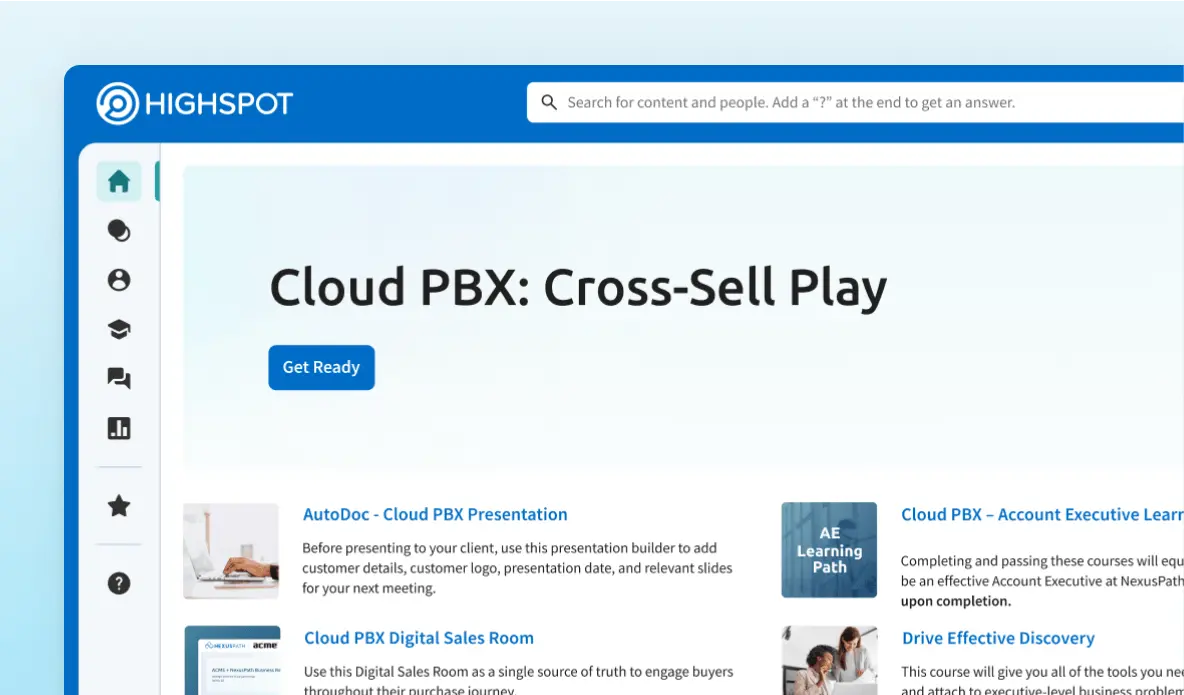
And then the Sales Plays: Our marketing team actually creates Sales Plays whenever we have a new product that’s going to market. Oftentimes, there are a lot of pieces of information that go along with that. We have member-facing materials, we have agent-facing materials, and then we also have things that are for our internal team only. But the Sales Plays really bring all those together so that when a salesperson is saying: “Hey, I need to learn about this product so I can go sell it right now,” it’s all in one spot for that product.
Without it, I don’t know how we would do it. It feels as though our business would be so limited because the fast pace that we’re rolling out products and the fast pace of regulation changes would be very challenging to keep up with without having this platform.
RR: That’s everything that we love to hear, is that the platform is helping you solve for those big problems. And it also kind of leads me to a question that I had for you, which is about how you’re driving alignment and consistency with Priority Health’s strategy and message.
You mentioned Sales Plays as kind of like an internal lever for keeping reps aligned, but what are your best practices for keeping agents and internal reps on message, on theme, and aligned to your strategy?
HH: Really, that is our entire job as our team is to ensure what you’re saying is exactly what is happening. So we do it a few different ways as we are building what these for, what the formal agenda is going to be—which is what we formally take out to the market to each of our agency partners.
At the same time we’re communicating internally to our sales reps what that’s gonna be and getting feedback from them about what it should be because they’re the boots on the ground and they’re getting the calls from the agent saying: “Hey, you guys don’t have enough information on this. Tell me more about this.”
That feedback loop coming to our team says: “Hey, we need to do more education in this area so that we’re aligned on the messaging.” Or if a rep says: “You know, we don’t know enough about this to go feel comfortable in the market with it,” we take that back and we know as our team, then we need to do better.
And our marketing team, like I said, does a lot of that, but what we do is corral it together in a meaningful way for them. We need to do it better. I’ll be frank with you, you know, this past year has been a little bit of, you know, drinking out of a fire hose—creating new processes, creating new strategies.
In terms of our communication to the market this upcoming year, we’re gonna spend a lot of time making sure that our reps have the same information as our agent partners in a more timely manner, so that there’s never a time where an agent is asking a rep something and the rep is saying “I didn’t know about that.”
RR: I think it’s an endless task, right? Enablement. The business is constantly changing and so is your work too, but it does seem like, at least looking at the data that you guys are starting to drive, the impact that you’re really looking to. We’ve seen that you’ve achieved a really impressive 90% recurring usage rate in Highspot, which tells us that folks are in the platform, they’re using it regularly, and it’s part of their workflows. So what are some of your strategies for driving that adoption? How are you keeping people in the platform and excited to use it?
HH: Being consistent with using this tool. So when we send out messages, we are very consistent in letting them know where they can find it, whether that’s providing the link or giving them teasers in the messaging to say learn more and then somewhat forcing them to the tool in order to learn everything they need to about it.
This is a couple of things. One, you know, if they’re curious about the product, they’re gonna click in and then they’re going to potentially see what else is there, which is really great.
But the fact that we’re using this really as our source of truth too for product information that’s been learned—because of the frustration of past years where they didn’t know where to go—it’s such a breath of fresh air that quite frankly, the user adoption, I don’t wanna say it’s easy, but it’s been easier because it’s been such a good problem solver.
We didn’t know how we were going to solve for before we had this platform.
RR: You know, you’re doing something right when just having folks land in the platform and realize “oh, this is so much better than what we had” is your main driver of adoption. That tells you you’ve built the right system, you’ve got the right structure, and you’ve built it exactly for them.
So that’s fantastic. I always kind of love when I ask that adoption question, it’s like, I don’t know. They just like it and you’re like, you’ve done the right thing. That’s fantastic to hear.
So, aside from that recurring usage rate that we just talked about, what other impact have you seen with the platform?
HH: Yeah, I got chills when you just asked me that question actually, because there is a piece that I’m so excited about. We track the metrics, of course, of how much usage is being had on the agency side. So again, I keep speaking to this Digital Room, but that’s where we put all the large group information.
And then we’ve also done the same for small groups. Seeing how much time has been spent there by our agent partners is a direct correlation of the time that doesn’t have to be spent by our reps. And in fact, I would argue even more when we first launched the pages, it was, we would look at the hours spent in there and we’re like, Ooh, three hours.
Ooh, five hours. Ooh, 24 hours. And then we just started to get excited of: “man, people love this tool!” And then just getting the direct feedback from the agents too. They’re like: “This is a game changer. Heather.”
I love not having to bother a rep with this information because that’s more time out of their day too, right? The agent then has to make a phone call. Or an email, which is more likely it’s adding to the multitude of emails that everybody’s getting every day. It takes that step out and creates a self-service environment that I think we all know and love. But I think that’s the most exciting piece
RR: That’s so great to hear. I think that digital room example is such a masterclass in how you can bring the workflows of Highspot to an audience that maybe doesn’t live in your platform, but you can still create that consistency, that transparency, and I think definitely something to share with our audience. I’ve heard a couple of teams do that, and it always works out wonderfully, so thank you for sharing that.
One last question for you: What advice would you offer to other health insurance organizations like yours that are hoping to build strong partnerships and drive consistent execution across their channels?
HH: My advice would be to really listen to your agency partners. Don’t dismiss what they are saying. Also, listen to your reps. Relationships are everything—trust, transparency. When you give your agent partners or your customer, regardless of the industry, that, you build something really special.
RR: Trust, transparency, good product. I think those are wonderful things to close on. Um, and I think it ties really nicely back to everything else that we’ve talked about.
I do have to say before we close out completely, Heather, it has been so wonderful to chat with you. I really appreciate you taking the time to come and share a lot of really wonderful best practices, some tactical, some strategic of how to use the platform and how to run in this industry.
HH: Well, thank you so much. I appreciate it too. Just the opportunity to really think about what this platform has done to us has brought some, a next level of appreciation from my end.
RR: Amazing. To our audience, thank you for listening to this episode of the Win/Win podcast. Be sure to tune in next time for more insights on how you can maximize enablement success with Highspot.