
According to Forbes, sales reps spend 35.2% of their time selling and 65% of their time on literally everything else. So how can organizations cut through the noise and focus reps on the activities that matter most?
Riley Rogers: Hi, and welcome to the Win-Win Podcast. I’m your host, Riley Rogers. Join us as we dive into changing trends in the workplace and how to navigate them successfully.
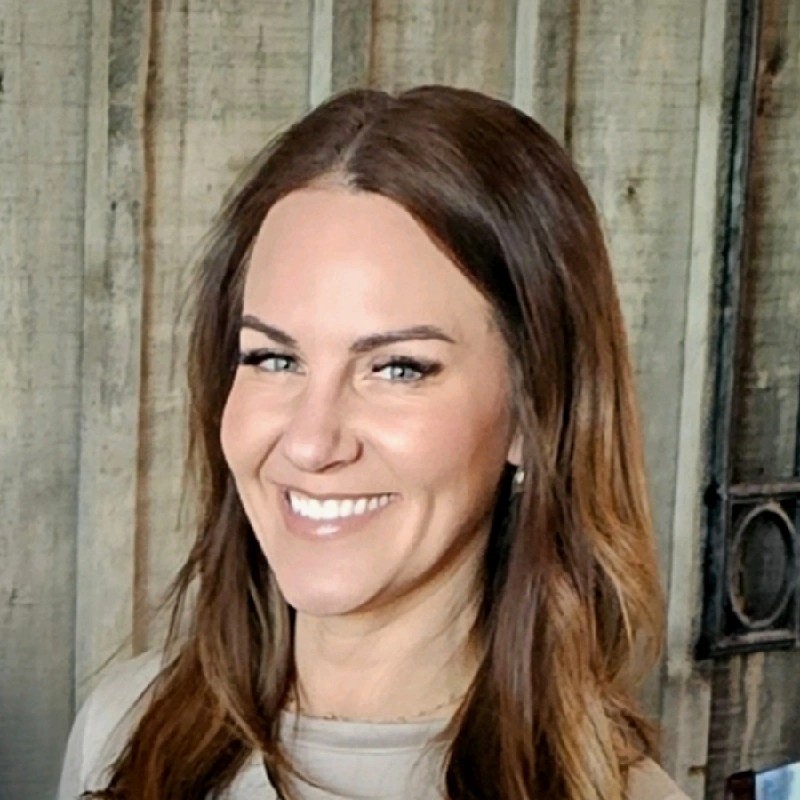
Here to discuss this topic are Yvette Boucher, Director of Sales Enablement at CentralReach, and Chelsea Louro, Senior Manager of Sales Enablement at CentralReach. Thank you so much for joining us, both. Just to kick us off, I’d love if you could tell us a little bit about yourself, your background, and your role.
Yvette, would you like to kick us off?
Yvette Boucher: Yeah, thanks for having us. I’m Yvette. I’ve been with Central Reach for about six years now, building out our enablement programs. We’re an AI-powered platform for autism and IDD care providers. Our end-to-end software and learning solutions help organizations deliver quality outcomes to help every client succeed.
I’ll pass it over to Chelsea.
Chelsea Louro: Thank you. I’m Chelsea Louro, senior manager of sales enablement. I’m also approaching six years here at CentralReach. And then prior to coming to CentralReach, I was a teacher for a little over a decade. I also did teacher training and recruitment and then education sales, then that brought me here where I was in SDR, an account executive, and then also now in enablement the last three and a half years.
RR: Amazing. Well, we’re super excited to have you here, especially knowing that you guys were both up for a Spark Award this year. So you are doing some really wonderful work that I’m really looking forward to digging into as we kick off.
I’d love to start with you, Yvette.
Let’s open with what’s difficult, what you’re up against lately. So, what are some of the core challenges to GTM success that you’re seeing, and how have those challenges kind of evolved throughout your enablement career?
YB: One of the biggest challenges we’ve seen recently is just how short the timelines have become between a product announcement and when reps are expected to start selling it.
We’re moving faster than ever, especially with our new AI products.
That means enablement has to get the reps the right information, the right messaging, and the right training almost immediately. It’s been a constant balancing act between speed and depth. We want reps to feel confident and well prepared, but we also need to deliver that enablement in a really agile way, so they’re ready to have meaningful conversations from day one.
So the pressure to move fast has definitely shaped how enablement operates today. For us, it’s not just about building training, it’s about building our systems and processes that can scale and flex with the business.
RR: I think you’re certainly not alone in some of those challenges. Organizations across the board are struggling with similar things, and everyone’s kind of looking for that silver bullet.
Chelsea, I wonder if you can maybe help us kind of build on this. So, from your perspective, how does an enablement platform support you and the team in addressing these challenges and helping reps focus on selling?
CL: Yeah, so I’ve been in roles at other companies where there wasn’t much organization. There was no enablement platform at all.
Both as a seller and a leader, I spent a lot of time trying to find the resources that I needed, and sometimes just—out of pure frustration—had to create my own. I know a lot of sales reps come across that as well.
So, having a platform like Highspot gives us kind of that single source of truth so we can get all of our content guidance training all together in one platform, one workflow.
Our reps aren’t spending time trying to find things and they can focus on what they really need to do, which is sell. It also helps us deliver insights back to our leadership, um, and lets us see what content and sales plays are actually driving our sales.
That visibility allows us to continually refine and to make sure that the reps are supported and then focused on selling.
RR: Kind of moving forward, I would love to maybe focus on some of the ways that you’re using an enablement tool.
I’ve heard that you and the team are doing some really wonderful things with Sales Plays, and that’s kind of part of what earned you that Spark Award nomination.
Yvette, knowing that Sales Plays are playing such a critical role in supporting some of your AI-centric product launches this year, I’d love to learn a little bit from you about what that strategy is, and how you’re using plays to streamline rep workflows.
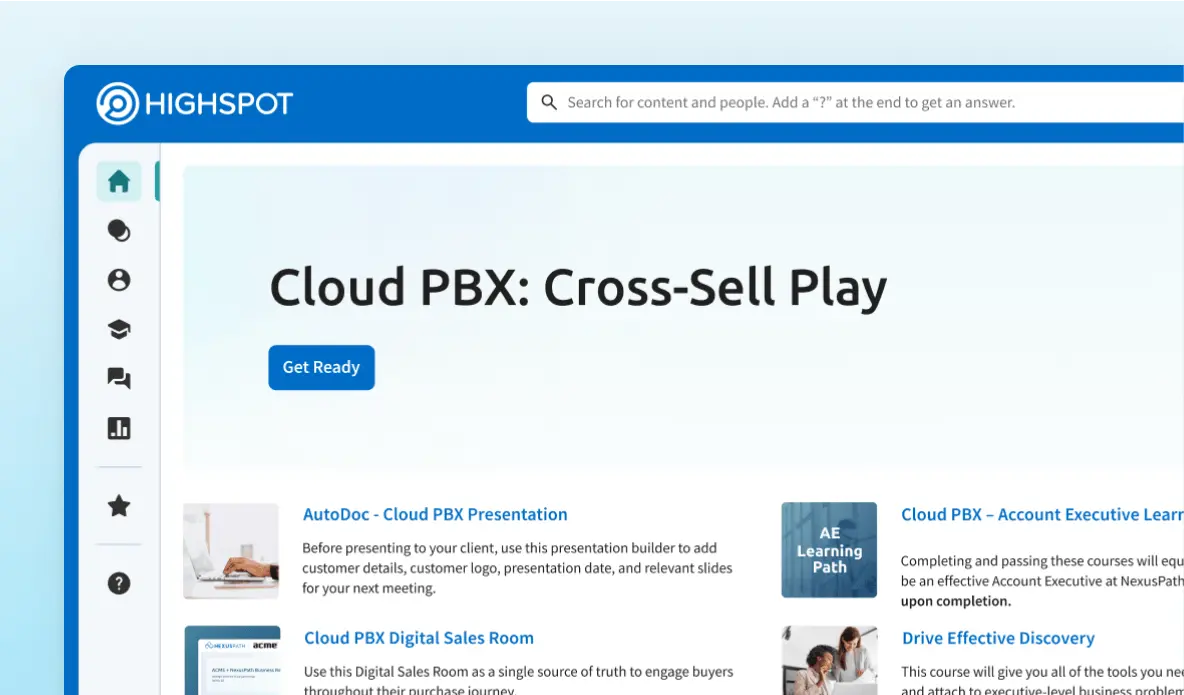
YB: We’ve really built our Plays with simplicity and speed in mind. So, the idea is that we get the right information in our reps hands as quickly as possible with who to target, what to say, and what resources they can use so they can jump straight into the action instead of digging through multiple tools or decks.
When we launched our AI solutions last year, the Plays became a living guide for the team. And because the plays live right in Highspot, reps can easily pull them up in the moment. So as our products continue to evolve, the Plays evolve too. So they’ve become a go-to reference point that helps stay, keep everyone aligned and stay confident in how they’re positioning our solutions.
RR: It’s funny because you know, a Sales Play is such a humble thing, but it can be so powerful if you use it right. It’s not just the strategy that I think is really impressive with what you guys are doing.
Chelsea, I’ve heard that you and the team have driven a really incredible 99 again, 99% adoption rate of your Plays. So can you walk us through how you maintain such high sales play adoption?
CL: I think a lot of it is just constant repetition and reinforcement. Our teams have kind of become used to our enablement and go-to-market communications, so adding in Sales Plays was just a nice easy process.
Every time we roll out a new Sales Play, we emphasize the importance to them. We let the team know that any changes or updates will be made in that Sales Play. So that’s where they need to go to find their source of truth.
I put out a weekly newsletter called the CR Morning Brew every Monday, and in the Brew we share new marketing content, any updates to those Sales Plays, any initiatives, things that they need to know.
Then we have a live sales meeting on Tuesdays where everything that was shared in the Brew is reinforced. So again, the reps are reading it, they’re getting it in sales team channels—because I share out that Brew in every single sales team channel—and then that live, vocal repetition and just making sure that they’re paying attention and, and they know what’s happening.
RR: I think one thing that’s really important that you called out there is that yes, you’ve driven really high adoption, but you also built the foundation of communication beforehand. So you had these levers in place that you could pull and be like: “You trust us. You know where we’re coming from, and now I can send you to the right places.”
So, you’ve built a strategy. You’ve seen near unanimous engagement with it, but it goes further than that.
Yvette, you shared that using Sales Plays during a recent product launch led you to influence over 900 opportunities. Could you walk us through how you drove those results and then how that impacted the launch outcomes?
YB: I think it really came down to how we set up the Plays to begin with. Like it came down with that alignment and teamwork. So prior to the launch we worked cross-functionally with product marketing, sales leaderships and our SMEs to make sure the reps had everything they needed for messaging, positioning, and the hands-on product support, which I think was key there.
They needed someone that knew that product. We also knew we would be learning in real time. So every team at CR leaned in to help them, everyone. By the time the Play that went live, we were already making edits and updates based on early feedback. Every update and change was communicated in our Morning Brew. sales team meetings, and individual team meetings, and we continued that communication and support from our SMEs, and that’s really what helped us influence those opportunities.
It’s also great that it was a great product for people to have.
RR: That is the kicker—it’s hard to sell when you don’t have something exciting. So I’m glad that both cylinders were firing there. You guys were doing the right things and so was the product.
Now, I feel like we could probably continue digging into Sales Plays, there’s a lot there. Again, like I said, they’re one thing that gets overlooked, but they can be really, really high impact.
I would like to maybe switch gears to another win that you’ve shared with us. Chelsea, you leveraged Highspot to redesign your onboarding program, achieving a really impressive one hundred percent adoption of required training and reducing ramp time by one to two weeks.
Can you walk me through what you were thinking about as you were improving this program? What impact has that has had on rep productivity, ramp time, and all of those good things?
CL: Yeah, so we kind of reimagined the onboarding program to be a little bit more personalized and performance driven. Using Highspot’s training module, we built out role-specific Learning Paths that kind of combine product knowledge, our Sales Plays, and then real world scenarios.
We also created an onboarding homepage. So when a brand new rep first joins the team, they log into Highspot. They have an onboarding homepage that clearly links all the Learning Paths but also defines the expectations, the deliverables, and what they should expect every single week. We also hold weekly check-in meetings with all of our new hires where we can answer any questions about what they’ve learned.
We have discussions, we’ll bring in SMEs and then we can do any troubleshooting. And then honestly, just using the analytics with the Learning Paths, we’ve been able to track completion and performance and we can kind of quickly identify where the reps need maybe a little bit of additional support in different areas.
But yeah, I mean this all together, we’ve kind of, like you said, we’ve reduced our ramp time, one to two weeks, and we make sure just with buy-in from our leadership, that all of the sales reps are completing every single Learning Path. So we do have that hundred percent completion rate.
RR: What motivated the shift in the onboarding process? Where were you, and why were you like: “It’s time”?
CL: We had all of the resources, but we hadn’t had that training or coaching platform yet. So we adopted that, really rolled that out, and that was kind of the kicker to get everything together and organized and built out into those Learning Paths. So I think just adding that training and coaching platform was the kicker to really redefine what our onboarding looks like.
YB: I would say that previously we had our onboarding program in another tool outside of Highspot. So it’s just—we know sales reps: They wanna find everything right away, very easily. So just putting content and introducing people “Hey, you’re gonna use Highspot for this, but in your onboarding you’re gonna be using something else” just wasn’t going to get people using it or building things out.
RR: That kind of goes back to something we were talking about earlier with your established communication cadences, and so bringing everything together, that’s a great move and I love to see that it’s already having that impact on not only engagement, but on productivity.
And I think one thing that’s really impressive to me is just how much data you guys are coming with—of we’ve improved ramp time, we’ve seen really high adoption, and we’ve seen high engagement.
Proving enablements impact is usually really, really hard. How are you measuring the effectiveness of your programs and demonstrating their contribution to broader business goals?
YB: That is such a good question and honestly it’s something that’s been a challenge for us too. Measuring the true impact of enablement isn’t always straightforward.
You can track engagement completion rates, but tying that back to real business outcomes takes a lot more work. One thing that really helped us in the last year really is using the Business Outcome section of our Sales Play Scorecards.
That gives us a way to look beyond the usage and see how those Plays are actually influencing the results. So it tells us a clearer story about how our enablement drives performance, and not just participation from our reps.
We’re taking that a step further next year. Our team is really excited to roll out Initiative Scorecards for our programs in 2026, so that’ll let us measure the impact across the full life cycle from launch to execution so we can keep improving and show the tangible value of enablement in driving the business forward.
RR: Can I ask how you’re planning to use the Initiative Scorecard? Knowing that CentralReach is in a pretty launch heavy motion right now, is it going to be for product launches? What are your goals for that?
YB: You know, we’re trying to develop that right now, so as we’re thinking of 2026 planning, I want to partner with the different sales leaders here as well as my direct leader and see what are our initiatives going into 2026.
So potentially Q1, Q2, we’re not sure how we’re gonna break that out yet. But really getting some pipeline generation numbers. I know we have a lot of releases happening in some of our already launched AI products, so I want to generate campaigns of this is the product of focus, how much pipeline do we want to build, and how are we gonna build it.
Then we’ll use that Scorecard to show here’s the content, here’s the Plays, and here’s the training, supporting the team. Then, here’s the teams using it, getting it out there, and being able to tie that back to our future opportunities.
RR: Amazing. I think that’s the foundation you need, right? You can have these key motions in the business, but encapsulating it all into an agreed-upon initiative that every function is aligned with is harder than you’d think.
So I like to hear that you’re starting that new planning with: “What are our initiatives?” We looked a little bit ahead there, but I’d like to kind of just take a pause at where we are. We’ve talked about a couple of wins—Sales Plays, influenced opportunities, improved onboarding programs, and better ramp time.
Outside of those things, since implementing Highspot, what are some of the key results that you’ve achieved? Are there any wins or really proud achievements that you could share?
Chelsea, I’ll kick it over to you first.
CL: Yeah, so I mean like you mentioned, just the 99% adoption of our sales plays and our onboarding ramp time being reduced to one to two weeks.
I think overall just the 900 influenced opportunities in our new AI products was a huge win for us and brought in a lot of revenue, and Yvette mentioned at the beginning, it’s really a tool that helps this industry and helps our customers. So we were really excited to see that. But overall, just our win rates have improved our deal velocity, and I think that’s just more thanks to consistent execution and messaging alignment.
Overall, I think the biggest win that we’ve seen is rep confidence. Our reps feel like they know what to say. They know the value prop, they know what to do. We get less questions, which is nice because they know exactly where to find things. They know where to go, what to find, how to use it, and just how to use it to win.
RR: I think that’s everything you want to hear—your reps know how to do the thing. That’s what you’re here for. So fantastic that you’re kind of achieving that and have the data to back that up.
Yvette, were there any wins that you wanted to share?
YB: Honestly, I think Chelsea nailed it. Like the Learning Paths and all the work we’ve been doing with our training, I think that’s been huge.
Definitely noticed the ramp time reduced with our new hires. They’re more confident, and I think we also have that always continue learning and changing mentality here. So, it’s meeting with Chelsea and the enablement team and always like, how do we improve this? Just adding things like Role Plays now for SDRs because we found that, hey, once we launch a training, yes they can get on, they can get opportunities very, very quickly, reduce their ramp time, but we want to improve their conversations, so let’s have additional weeks of learn of Role Play training added into their courses.
Just those minor changes make a really big difference.
RR: Fantastic. I love that you’re kind of evolving your strategy with the product, that as new things come on board, you guys are embedding it and finding new ways to make the product work for you.
And that kind of leads me to my last question very neatly, which is that we’ve talked a little bit now about Spark—and you guys were able to come and join us and see a little bit of the fun, exciting new things that are coming out—so looking ahead, based on what you saw, how do you plan to evolve your enablement strategy, especially with some of those AI features? Maybe it’s Role Play, maybe it’s other things.
YB: Spark is always such an inspiring event and we love going every year and this year really showed how quickly AI is transforming the way we work.
So, for us, we see AI as a huge opportunity to scale our enablement smarter. We’re exploring ways to use it to personalize a learning experience, surface more relevant content right when the reps need it, and provide managers with coaching insights to help them guide their teams more effectively.
Our goal is to make enablement more proactive. So we want to anticipate what the sellers will need before they realize it themselves. So that’s where AI will come in. For us. It’s not just about speeding things up, it’s gonna be about helping our reps focus on what really drives the results.
RR: I think that’s a great vision.
One of the ways I’ve heard it put is that AI can allow us to do more, but what it can really allow us to do is do better. So you guys, it seems, are really leaning into that and I can’t wait to see how it turns out.
I know we have kind of hit the time that we have for you today, so I just wanna thank you both again for joining us. It was a really wonderful conversation and it’s been so fantastic to hear from you.
CB: Thanks so much for having us.
RR: To our listeners, thank you for tuning into this episode of the Win-Win podcast. Be sure to tune in next time for more insights on how you can maximize enablement success with Highspot.