

According to LinkedIn’s Workplace Learning Report, 49% of L&D professionals say their executives are concerned that employees don’t have the right skills to execute their business strategy.
And in busy, fast-paced industries, that gap is becoming a real problem. Because if the product, market, and go-to-market motion are all evolving at once, organizations are left asking the same question: what does it actually look like to build an enablement and a go-to-market model that can keep up and build those skills as they’re needed?
Riley Rogers: Hi, and welcome to the Win/Win Podcast. I’m your host, Riley Rogers. Join us as we dive into changing trends in the workplace and how to navigate them successfully.
Here to discuss this topic is Julia Townsend, Go-to-Market Enablement and Business Development Leader at DataRobot. Julia, thank you so much for joining us today. I really appreciate the time. Super excited to hear about the work you’re doing in this arena today. Before we jump in, though, I’d love if you could tell us about yourself, your background, and your role.
Julia Townsend: Yeah, great. Thanks for inviting me, and Riley, really appreciate it, and excited to share more about what I do at DataRobot. So yes, I lead the go-to-market enablement and business development function at DataRobot, and if you’ve not heard of us, we are the only end-to-end agent workforce platform for secure, scalable, and production-grade agents.
We are based out of Boston, although I am based in the UK, so we do have a global workforce. So when it comes to enablement, I own it globally. Plus, as I said, I also have the business development piece. Pretty interesting role that is fairly unusual within the enablement space. But day-to-day, what that means is a few things.
So I run our enablement team, so within that, I have a BDR and sales revenue enablement specialist, I have a go-to-market readiness specialist, and I also have a technical enablement data scientist, which is brilliant. And then I also have our BDR team who are based in Boston. So a little bit about me. So prior to making a career change to working in enablement in the AI ML space, I actually did start out as a BDR myself, then I was an enterprise seller in the SAS observability market for many years.
I’ve been with DataRobot for five years. I’ve been through quite a few different distinct eras of where we’ve been. And so started out very early with very hiring-heavy model. We did a lot of in-person boot camps, then we had a bit of a restructure within our business, which is very typical within the AI space.
It’s very much up and down, so we had to rebuild the enablement in a much more of a leaner type of practice. And now within the AI agentic era, where the products in the market are moving so, so, so quickly, any of the other early enablement models that we’ve had, it’s really, there’s been a lot of changes.
RR: And that leads us very well to kind of the first topic we were gonna touch on, which is the fact that change is abundant and everywhere, especially when you’re working in the AI space. So as you’ve been navigating the enablement journey for the last five years at DataRobot, what has shifted about how you think about enabling sellers from when you first started to what it looks like now?
JT: So I guess the biggest shift when I think back to those years is moving away from a very calendar-driven compliance type model towards something that’s much more embedded where the seller is and is very continuous. In previous older years, we were very much all about completion tracking, which in hindsight looks a lot like compliance monitoring.
So there were lots of weekly reports on showing who had or hadn’t finished a learning module. We were very big on the stick piece back in the day. And then I guess after we had our organizational restructure a couple of years back, our hiring volume dropped and the business model changed, and the need for big recurring cohort in-person boot camps really evaporated.
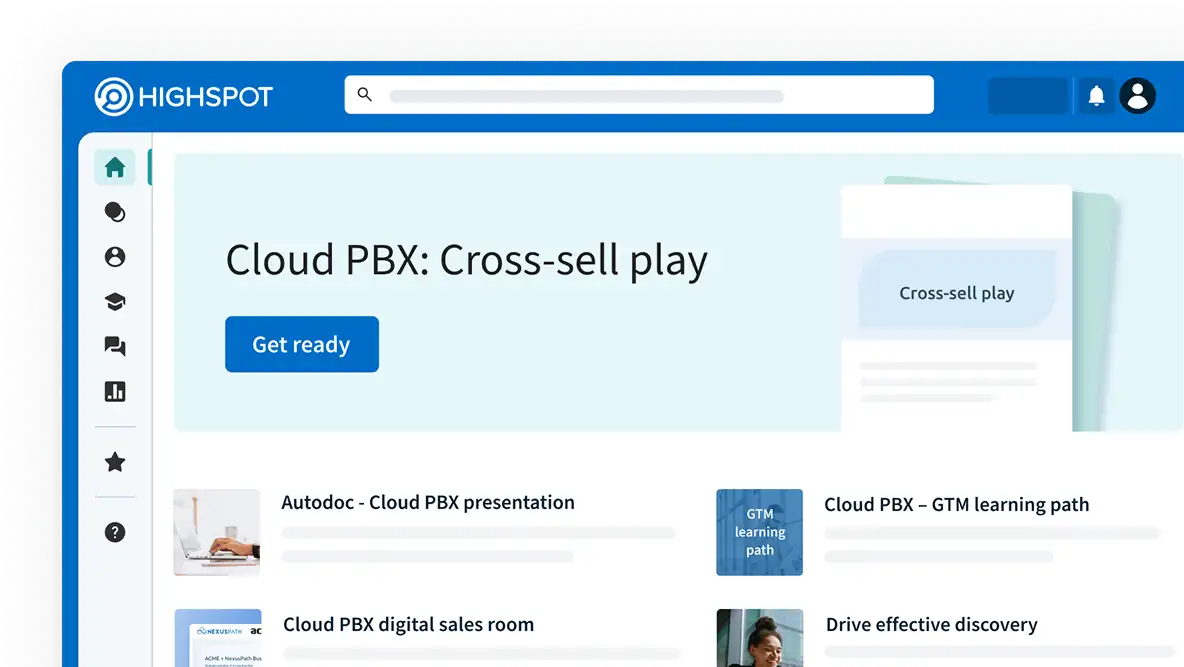
So that meant that it forced enablement to start pivoting towards much more of a leaner targeted delivery. Tracking forward to today, enablement definitely lives now inside the same sorts of tools and the cadence that sellers already have. We use Highspot, we have the content management and the learning management modules.
So that means we’re able to offer very much bite-sized content. So it means that rather than the field having a separate training destination that they have to go into, what we’re providing is very much just part of the weekly workflow for them to be successful. So they’re not visiting stuff occasionally, they’re always in it.
So it’s less about building a big curriculum and running it once a year, and it’s much more about treating enablement like a live product.
RR: We kind of talked about what it means for enablement as a function to be working amidst this change, but like you alluded to, DataRobot is a company in a market that never really stops moving. So what does that kind of environment demand from you?
JT: It is really about speed because we operate in a very competitive environment. There’s a ton of companies out there that are specialist agent builders, they’re there to sell you some sort of agent to help you in a day-to-day life.
But then there’s also companies at our level who are also providing platforms, and it’s very, the language is very similar, so it’s very hard to stand out. So when you have an edge with your product development, those USPs, you really have to get the sales team on board with it and talking that language, that new messaging, that new positioning to customers as soon as it’s been created.
So speed is very important. What that means for enablement and content is that it has to ship in days or weeks, not quarters. For example, two Sales Plays that we launched last quarter, our Dell seller-to-seller play and our customer expansion play, they both went from kickoff, initial conception, to the field launch on very, very tight dated project plans with weekly status checks, which meant we could launch them in a matter of weeks, whereas in the past, it would take us a lot longer to do that.
RR: I’d love to drill down into an example that you mentioned as you were speaking to the speed piece, in a recent instance where that became a necessity. So the Dell partnership. You shipped a Sales Play for it, you enabled the team quickly on the messaging. What did that look like to build, and can you tell us a little bit more about the scenario around it?
JT: So DataRobot, we have a fairly new strategic partnership with Dell and Nvidia. As this was a new business drive for us, we had to create a very specific Sales Play that was focused on our reps engaging with Dell reps. And I think this is a little bit different maybe to other enablement functions or what we also did in the past, where plays tend to more focus on the sales process, so things like objection handling play, first meeting play.
Whereas this play had a pipeline generation target attached to it, and so the play centered on building early-stage pipeline with Dell sellers, and it was very, very specifically around that. The Dell engagement with our Sales Play ended up being quite a few different types of enablement requirements that are stacked on top of each other for different audiences, but all around roughly the same timeline.
So for example, we first launched the Dell seller-to-seller play. This was equipping our own sellers to target and partner with the Dell sales team. We launched this towards the end of Q1. But then coupled with that, we then did some event-specific BDR training. Our BDRs were going to some of these Dell networking events with the sellers and meeting them, and they needed to have the right narrative.
They needed to understand some of the vertical specific use cases that would get a Dell seller interest. So we did lots of live role play practice with them to make sure they were able to do that effectively. But yeah, I guess to summarize that piece, it wasn’t just one enablement deliverable, it was four or five different audiences that were wrapped into one Sales Play, but it was very much focused on a pipeline generation target.
RR: What was the timing like from we have this partnership to now I need to enable the field to I have enabled the field? How does that differ from maybe a year ago what that would’ve looked like?
JT: Yes. So I guess a year ago, it felt like there was more luxury in terms of time, because the Sales Plays then weren’t so much aligned to a specific pipeline target. So if your Sales Play is more around objection handling or first meeting deck, that’s important, but it doesn’t quite have the same impact on what the business needs in terms of a north star metric that will translate into real business revenue and deals closed. So that was one thing that was different.
In terms of the timeline, probably took us about four weeks. We really put the heads down with the team. We had a daily project call to work on the content, test it, and ship it out. We ran it like we would a product launch, so using the same sorts of methodologies around that with reviewing, iterating, building, testing, those sorts of things. So that was also different. We had a very tight project management approach to it, which enablement led.
Because this was tied to a real revenue metric, it really had the ear of the CRO. It was his prerogative to drive this. So that also was super helpful, was having executive sponsorship all over it, encouraging the reps to lean in, and being the voice of enablement, helping us amplify what we did to help them, and that’s all because the Sales Play was attached to a real revenue goal.
RR: Four weeks, that’s a pretty crazy turnaround, I imagine. Like you said, very heads down. So we’ve established then speed is the name of the game. I’d love to talk about how that shows up in training, because it used to be that it was very common to have standalone platforms, training existed in a specific location that sellers had to go to, had to go find, and it was hard to build.
But now a lot of organizations are moving away from that very complex approach. So why do you think, with this context of speed in mind, that traditional training tactics aren’t quite working, and why organizations are shifting away.
JT: It’s a real shift in how our industry is around learning development. There still is a place for it. In the sort of company that I work in, that older model hasn’t really worked for us. So I would say that you need something that flexes quickly when the business changes, and in our industry, AI and machine learning, as I said before, it changes all the time.
So having standalone systems that fragment that seller experience, in our own house, for example, over the years we’ve had MindTickle, Confluence for reference, InPartner for partner region enablement. Each of those systems required quite specialist knowledge to build training content, do the certification, manage all those different pieces to make sure they’re accurate and up to date.
It’s very difficult to do that in a fast-changing industry with very specific knowledge. You need to be able to scale it across an enablement team so that anyone in the team can be competent enough to build and design something when it’s needed. And in small enablement teams, which we have, in companies like ourselves, we need to be able to pivot and have more ownership across that.
So we needed something that could really simplify and scale out learning and training that was accessible to as many people as possible. And that, for us, has been Highspot, and that’s why we invested not only in the content management side, but the learning management side of things. So it’s very easy now for the team to work on pieces that we need them to. It’s very simple and easy to use.
RR: As part of that shift to agility, you brought on Highspot’s training capabilities to democratize building, to make it easy for anyone to create a course, to create a Role Play, to do whatever they need to do to train up a team. So what has that switch made possible? How has it helped you? What have you seen?
JT: It moved us from a couple of years ago, from a small number of very specialized roles in enablement, to now much more of a, I guess you’d call it, a hub-and-spoke model. So our– someone in the enablement team like myself or one of the other team members builds out the general master course and certification structure within Highspot.
But our subject matter experts in product marketing or product, et cetera, they can update the content directly. So dropping in an updated video, some deck messaging content that needs to be done, it can all be done in real time, which we really appreciate. It’s also shortened the time between deciding on the content and publishing it. So reviews, edits, uploading it to Highspot can all happen much more quickly, sometimes just in one conversation over Slack, which again means we can move a lot faster.
The other bit is the easy governance piece, which is really important. So rather than having learning spread across lots of different platforms, now we have it in one platform. So the Highspot analytics piece around governance means that we can track zombie content on a rolling basis. In fact, we’re halfway through now another content cleanup and governance pass. So it means it’s easier for us to do that as well.
The other area is the AI coaching side. That’s opened up a lot more for us on learning too. So you can author and do coaching in the same tool, which is brilliant. So we’ve got AI Role Play. All of that feedback can sit in the same space as the content itself. So building, practicing, certifying, all of those things, testing can all happen in one place.
RR: I think that’s our goal, right. Everything is centralized. You can go from one part of the learning process to the next within a click. And if you feel like you need to go back, you can easily do so. Curious what kind of use cases you’ve been using Role Play and the AI coaching elements for?
JT: Well, we had a lot of fun with AI Role Play. We launched it at sales kickoff back in February, and we just did a silly Role Play to begin. We did something like sell me the cowboy boots because we were in Nashville.
But I think one of the projects, more serious projects, is around our new discovery deck, which is designed to support better qualification at early-stage pipeline generation. As part of this program in Q3, we’re also launching a new revised sales process and the structure of how we’re doing it. We do a mix of live and self-paced learning, so we’ll launch it live, through our Friday session.
Then the seller is then encouraged to move to the self-paced piece, and we’re going for a multi-stage learning experience to ensure that reps don’t just know the pitch. So stage one is know it, then we go to stage two, which is see it in action. So we provide a gold-standard recording for reps to follow, to aim for a North Star.
Then stage three is to do it, which is more the hands-on side of things. So reps need to submit recorded pitches. They need to participate in the interactive AI Role Play that we set up for them. All of that is shipped within the Highspot Sales Play kit, so the rep has one place to go before and after the discovery call.
RR: One of the other priorities I know we talked about in terms of training was onboarding. So knowing that was an early test of this new way of training, how has that changed for you?
JT: Yeah, for sure. So past was very much in-person, multi-day boot camp model, and that was paired with these compliance, weekly completion checks. But then when hiring started slowing down, that model didn’t work for us anymore, so we replaced it early on with much more of a self-paced approach.
So now it’s self-paced, but it’s very tightly tracked through a four-week ramp-in period. So you have a day-by-day, week-one-to-four tasks, basically things like email signature, tool setup, but then coupled with things such as the welcome video from our CRO, company go-to-market strategy content type things, and then the sales-based specific courses that we want them to do.
They get paired with a sales mentor as well as an enablement partner. Basically, we provide– although it is self-paced, we still bring that personal coaching, but it’s all driven through Highspot. All of the pieces for the onboarding are driven through there.
RR: Now, we’ve heard a little bit about how training is structured, and we’ve talked a little bit about how you don’t want to be compliance testing of did you do it. But once training is built and launched, you do still have to get folks using it, getting folks practicing, and getting them internalizing the learning that you’re providing, and that’s hard. So how are you thinking about what AI makes possible on that side of the training function?
JT: So the first thing that comes to mind is the AI Role Play feature. You know what it’s like. Reps, myself included, it’s horrible doing Role Plays with managers and peers because of that social pressure aspect. There is space for it at sales kickoff and fun experiences. But if you’re going to continuously practice, you wanna do that in a safe space. The AI Role Play really is the way to go.
In the past, it would’ve been a heavy lift for enablement, so we would’ve had to have listened to everybody’s recordings, manually graded them, sent feedback continuously, which is hard with a small team. With AI Role Play and features like that, it means it’s a lot quicker, and it’s easier now to have a baseline to track things like pace, objection handling, how someone’s told a customer’s story, have they hit on the key points of the messaging we want them to do?
So it’s a lot easier now. With the AI Role Play feature, sellers get that automated feedback. They get given that immediately right after they practice. They don’t have to wait days for enablement to listen or their manager to then review it. It’s all there. So I’d say that’s a really big change to how coaching happens.
So reps still get in-person coaching with their sales lead or with an enablement person, but it’s not the same as having you practice something and then immediately getting the feedback back. That’s been a good change. Some of the team attended a, I think it was a roundtable workshop with Highspot recently around skills in AI Role Play, and that really helped us narrow what the skills should be.
Before we were thinking about up to nine skills to build into the AI Role Play. But after some coaching, we were told that up to three would be best, so we’ve rethought how we do that. So now it’s just a lot easier for enablement and sales leaders to offer coaching because it’s done, some of it is done through the AI Role Play, and it means it’s continuous rather than just happening again once a quarter.
RR: Have you seen any change in either the way that sellers engage with training because they have this lower stakes opportunity to try, try again, fail, try again, succeed? And has it, on the enablement side, saved you time? Curious, both sides of the equation, how has that worked out for you?
JT: It saved the enablement team a ton of time. As I said, having to go through lots of reps’ recordings and manually listen to them, pause it, check the rubric, come back, what did they say, go back again. It’s very time-consuming to do, and it adds a lot of pressure to the enablement team and also to the sales leaders as well.
They’ve got a large sales team. And enablement is pushing out this stuff they need to be certified in. It makes it quite difficult. So there’s been a big time saving there for sales leaders, but also for enablement in how we assess reps. Then also having that standard baseline.
So before, you’re coming at it from your own biases in how you feel that day and how you listen to someone’s submission, whereas with the AI piece, it doesn’t work like that. So it’s always assessing at the same baseline, which is great.
In terms of reps engaging with training in general, it’s definitely helped, for sure. As I said, we offer bite-sized training that is self-paced, and reps can use that just in time when they have the requirement for that piece of training, which is helpful. The AI Role Play just extends that further. It gives them just the chance to practice things before they go into the wild.
RR: On a broader scale, you’ve made this shift, you’ve created these programs that fit every angle of training and skill development into one place, and you’ve rolled it out in a number of different programs. What sort of impact have you seen from this shift in how you approach training, all up?
JT: So definitely the confidence one. The go-to-market team sentiment is trending upwards, which is great. So our recent company-wide EFPS in June was our highest to date, and it had a four-point jump month over month, which is good. And specifically, a driver was called out as learning development skills related to generative AI, so that’s a great one.
And then secondly, as I mentioned before, we talked about that Dell Sales Play. So enablement were held to a pipeline creation bar, not just training delivered there. And as we look back and start looking at the quarterly business reviews, we can see, working with the rev ops team, that we’re definitely hitting, overachieving, the pipeline goal set by our CRO, which is great. So yeah, two really good signals.
RR: I imagine that must have felt quite nice to look at the results of that survey and see the work that you’re doing called out as a key lever for improving confidence. So bravo to that. Hearing that you have these two measurable signals, you’re seeing that it’s working. The shift has been positive for both your team saving time and the sales team having a lower stakes way of engaging before, as you said, they go out into the wild. For anyone who’s looking at their training setup and is going, “I wonder if there’s a different way I can do it,” what would you want them to hear?
JT: Avoid acting like an academic institution, and start acting like an agile product team. So we know that sellers don’t really want 45-minute courses. I don’t want that. They want to have the minimum viable capability just in time required to find and win their next deal. That’s really important. So what we’ve learnt, and industry best practice as the trends are starting to emerge, is to embed that learning directly into their workflow. So meet the sellers where they are. Empower the enablement team to build quickly, give them the tools to do that, the confidence, the buy-in, and then measure the success through things like conversation quality, pipeline creation conversion. That’s how you’ll see the results.
RR: Julia, thank you for taking the time to chat with us today. This was wonderful. I think for anybody who’s looking to modernize their training or just reimagine, this will be super, super valuable. To our audience, thank you for listening to this episode of the Win/Win Podcast. Be sure to tune in next time for more insights on how you can maximize go-to-market success with Highspot.