Assessment
Take the Go-to-Market Maturity Assessment
Take the go-to-market maturity assessment to uncover what’s limiting execution speed, alignment, and predictable results.
Why assess your GTM Maturity?
Most GTM strategies don’t fail on vision. They struggle in execution. Initiatives stall. Coaching varies. Messaging shifts. Impact is hard to prove.
This go-to-market maturity assessment reveals your stage, highlights where execution is limiting performance, and shows what to prioritize first, so you improve alignment, adoption, and revenue outcomes without trying to fix everything at once.
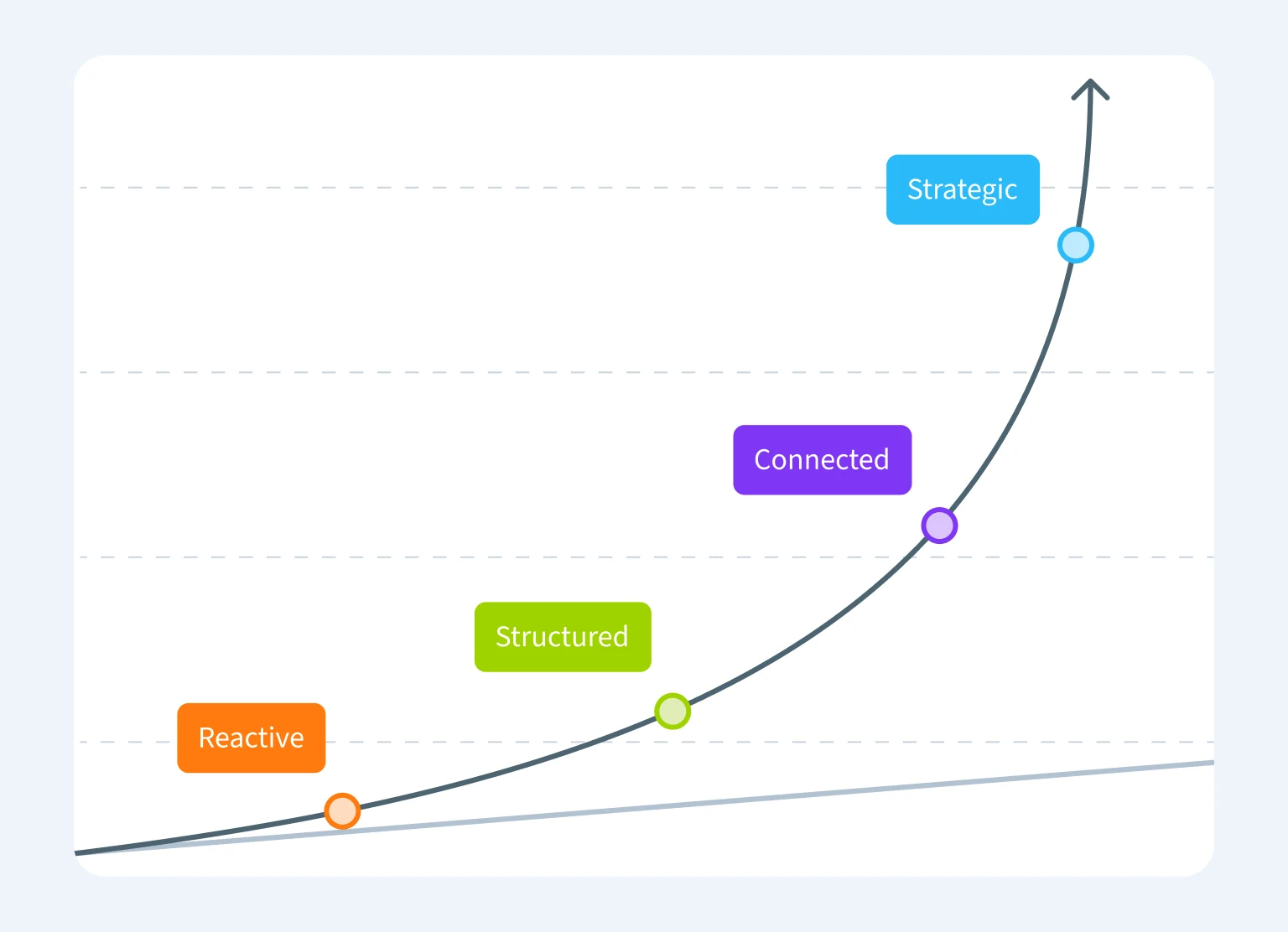
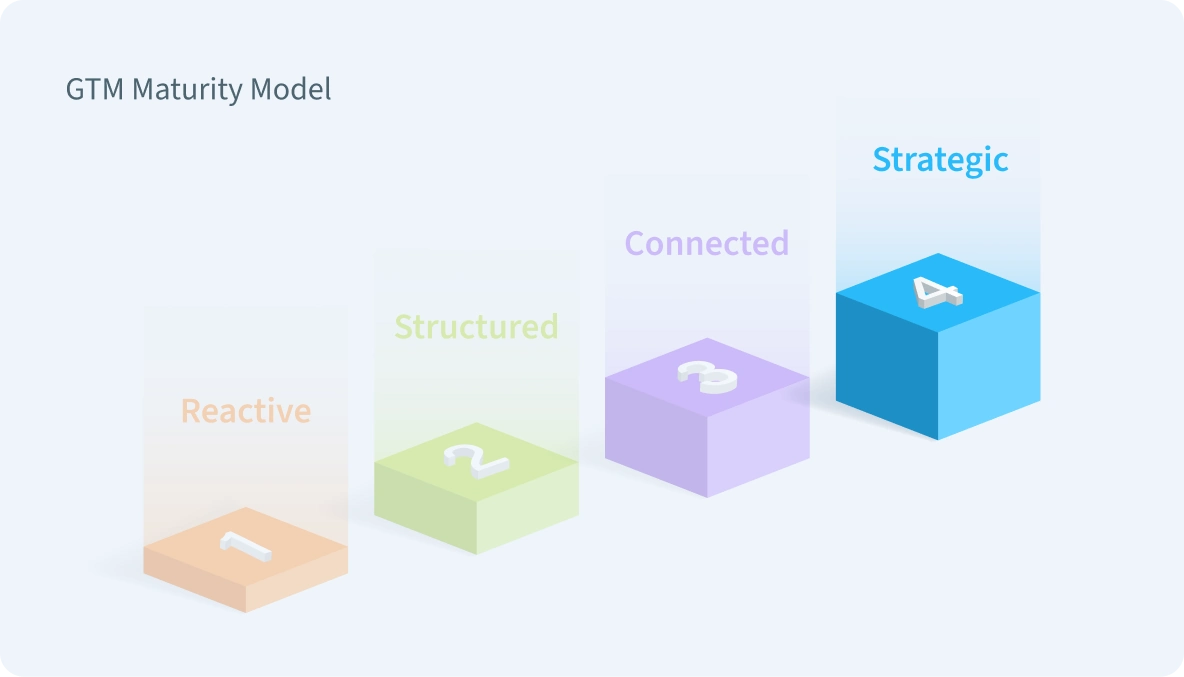
Stages of a go-to-market maturity strategy
Reactive
Execution depends on heroics. Results are inconsistent.
Teams run important initiatives, but work is largely ad hoc and siloed. Content, training, and messaging change fast, but adoption is hard to track and even harder to sustain. Decisions are often based on anecdotes because data is fragmented.
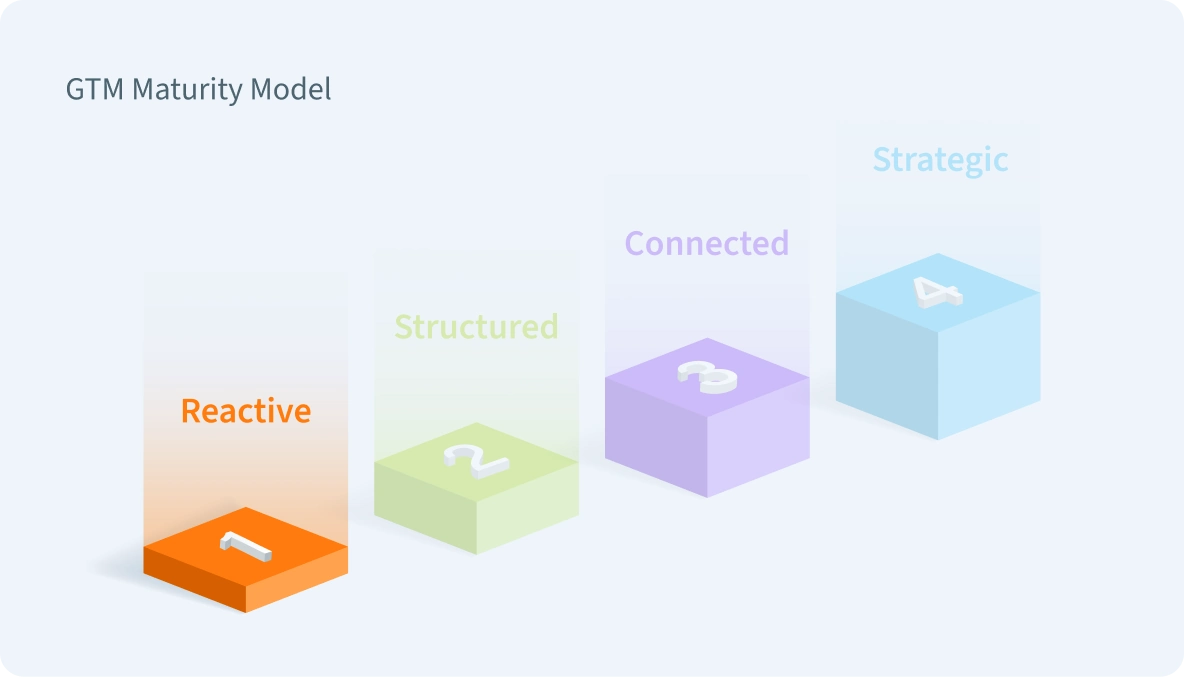
Structured
Repeatable programs exist, but impact is hard to prove.
Core enablement and GTM processes are documented and more consistent. Governance improves, and programs are easier to roll out. Measurement is still limited, so it is difficult to connect GTM activities to pipeline and revenue outcomes.
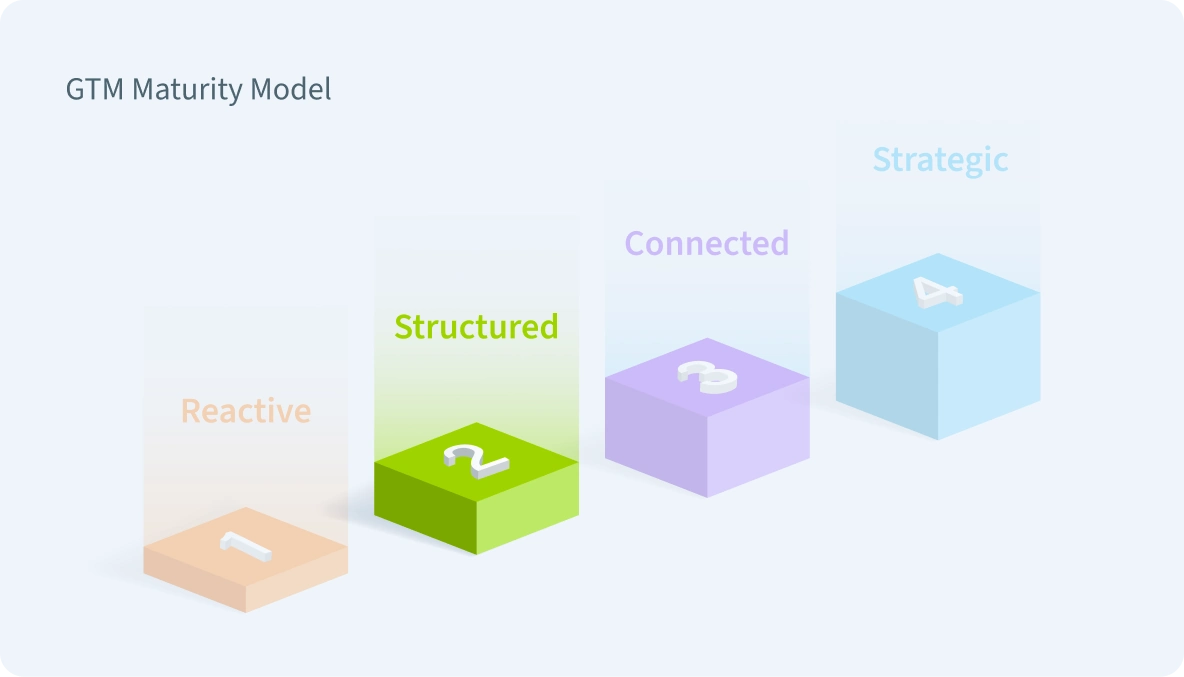
Connected
Teams align and systems connect, improving speed and consistency.
Marketing, sales, enablement, and RevOps operate with shared priorities and tighter workflows. Data and tooling are better integrated, enabling more relevant guidance in the flow of work. Leaders can see what is being adopted and make faster adjustments.
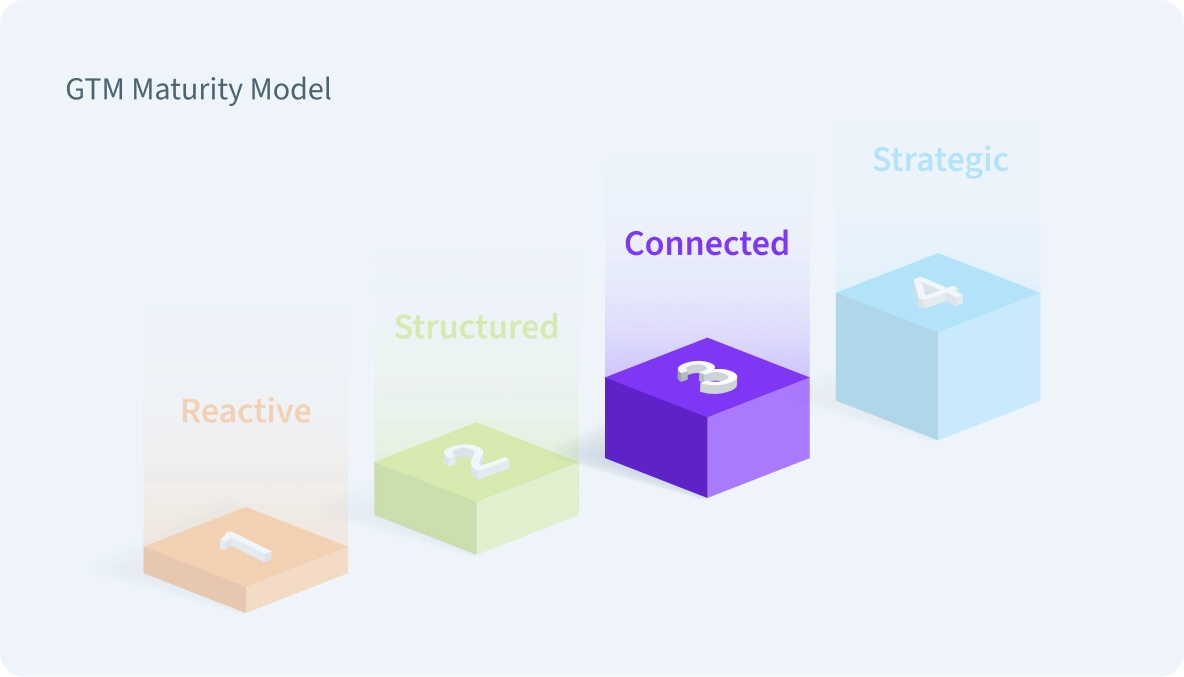
Strategic
GTM runs as a performance system that improves continuously.
Strategy and execution are fully linked. Teams use clear insights to scale what works, improve what does not, and keep initiatives on track. Measurement supports confident decisions about investments, resourcing, and GTM change so performance becomes more predictable.
GTM assessment FAQs
What is a go-to-market maturity assessment?
A go-to-market maturity assessment helps you understand how effectively your organization plans and executes GTM across marketing, sales, enablement, and revenue operations. You receive a maturity stage and recommended next steps.
What is the Highspot GTM Maturity Model?
The Highspot GTM Maturity Model is grounded in work with hundreds of GTM teams and helps leaders understand why execution feels hard today, and what to change to make it more effective. The model defines four stages of maturity: Reactive, Structured, Connected, and Strategic, each reflecting a different level of GTM effectiveness.
Each stage highlights the strengths you can leverage, the gaps slowing progress, and the risks that limit scale, giving teams clarity on where they are today and what to prioritize next to drive measurable impact, rather than trying to fix everything at once.
Who should take a go-to-market assessment?
This assessment is designed for revenue leaders responsible for execution and results, including: sales leadership, sales enablement, product marketing, revenue operations, and GTM strategy teams. Many companies complete it as a cross-functional working session to build shared alignment on what’s working, what isn’t, and where to focus next.
What will I get after I complete the GTM maturity assessment?
You will receive your maturity stage, a breakdown across key pillars, and practical recommendations you can use to prioritize improvements. The goal is to help you prioritize the changes that will most improve execution now, and build a more scalable GTM engine over time.
How does GTM maturity impact pipeline, win rate, and sales productivity?
As GTM maturity increases, execution becomes more consistent and less reliant on heroics. Teams align faster on messaging and plays, adapt more easily to change, and reduce friction across marketing, sales, enablement, and ops.
The result is a healthier pipeline, more predictable win rates, and higher sales productivity, because teams spend less time figuring things out and more time executing what works.
Why does GTM execution feel hard?
GTM execution often feels hard not because strategy is unclear, but because the operating system behind it isn’t fully aligned. When workflows, tools, coaching practices, and data standards vary across teams, effort increases. Sellers navigate multiple sources of guidance, managers reinforce differently, and visibility into what’s driving performance remains partial.
The challenge isn’t effort, it’s consistency. The Go-to-Market Maturity Assessment helps you pinpoint where variability exists across People, Process, and Technology. It clarifies how connected your execution system truly is, and identifies the priority shifts that will make execution more repeatable, measurable, and scalable. Instead of guessing what to fix, you gain a structured view of where to focus first.