
Key Takeaways
- Measuring sales effectiveness across the go-to-market (GTM) function enables revenue leaders to see gaps, replicate what works, and drive consistent, measurable growth across teams and revenue-critical workflows.
- Sales effectiveness improves when reps focus on high-value work—think guiding deals, navigating objections, and closing business—rather than spending energy in the wrong places or scattered sales processes.
- Go-to-market teams elevate GTM outcomes when sales data and SDR feedback are combined to inform coaching, streamline selling motions, and scale what top performers do differently across key selling scenarios.
Every B2B seller knows the feeling: a packed calendar, endless emails, back-to-back calls, and a ceaseless stream of back-office tasks to tackle. This busywork is often the culprit for poor sales engagement and conversion.
When sales representatives on your GTM team don’t have to focus on this admin work, their deals tend to progress through the pipeline like clockwork.
Most days, though, your SDRs—like so many others today—are likely mired in tedious, manual labour, leading their discussions with active opps to stall.
In modern B2B sales, it’s evident that effort doesn’t always equal impact. Case in point: Salesforce’s State of Sales Report shows that the average sales rep spends roughly 60% of their time on non-selling activities—time that should be spent working with leads to get deals closer to (and eventually past) the finish line.
This is why constantly assessing and taking action to improve your team’s sales effectiveness is so critical today. By knowing which actions move the needle, you can give your sellers the focus, tools, and guidance to do so consistently.
Since sales effectiveness looks different for every company, discerning the quality of your reps’ efforts can be tricky. But with a clear definition of rep effectiveness, you can implement a systematic approach to elevate their output—and make considerable headway with achieving B2B revenue growth goals.
Sales effectiveness FAQs
What are the common signs a sales team lacks effectiveness?
Strong revenue can mask weak execution. Watch for uneven deal quality, sales pipeline propped up by a few top performers, late-stage deals that stall or slip, and frequent “no decision” losses. These signal process gaps and inconsistent deal strategy that won’t scale or hold up over time.
How should we evaluate sales effectiveness by role and region?
Use context-specific benchmarks. Define effectiveness by factoring in deal complexity and revenue influence, then normalise for market maturity, competition, and average sales cycle length. Comparing reps’ execution quality to regional norms can help you better gauge performance and allocate resources.
Should we measure sales effectiveness differently by rep tenure?
New hires benefit from clear structure, defined milestones, and consistent feedback to build confidence quickly. Tenured sellers need refinement—challenging assumptions, tightening deal strategy, and holding them accountable to outcomes. Applying one approach to both limits growth and rep performance.
Can sales effectiveness conflict with short-term revenue pressure?
It often does. Revenue pressure can push teams toward volume and shortcuts, increasing activity without improving deal quality. Sales leaders must reinforce effective behaviours during high-pressure periods or risk normalising habits that inflate sales pipeline but erode win rates and deal health.
How long does it realistically take to enhance sales effectiveness?
Most teams see real improvement in one to two quarters. Insight comes quickly, but behaviour change takes repetition, reinforcement, and validation. Teams need time to test adjustments, coach consistently, and confirm that new behaviours are improving outcomes.
Which tools help GTM teams improve sales effectiveness?
A combination of AI-native platforms like Highspot and Salesforce helps many go-to-market teams measure and improve reps’ sales effectiveness quickly and efficiency, as these GTM solutions surface deal insights, review and summarise recent sales conversations, track content engagement, and monitor pipeline health.
How can analytics uncover hidden opportunities to boost sales effectiveness?
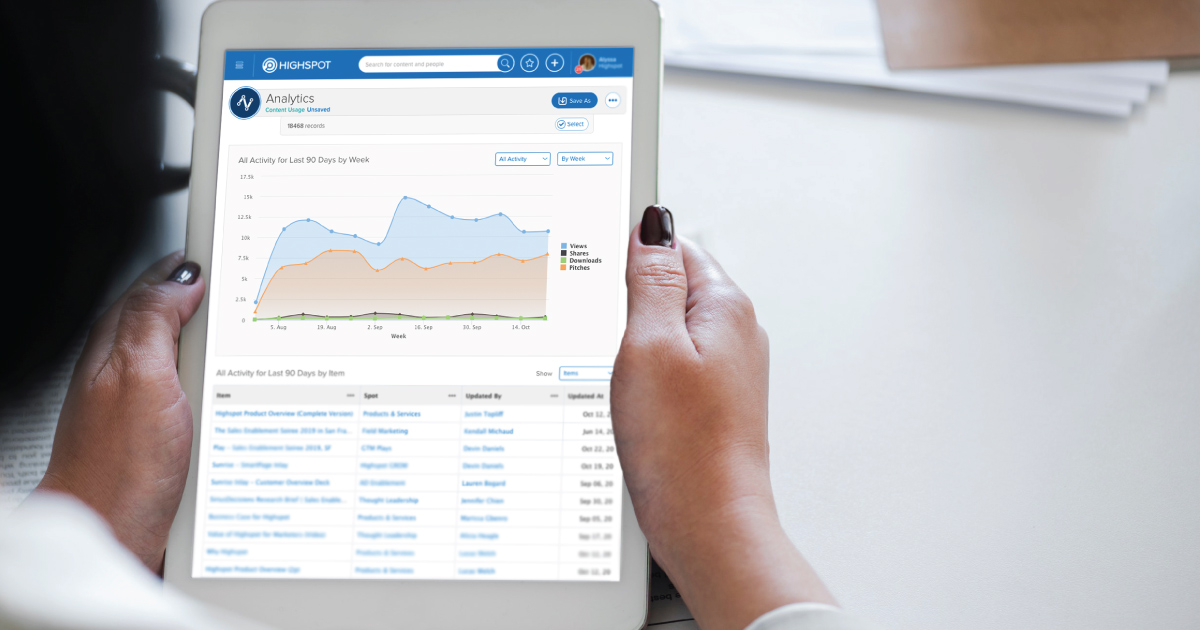
Analytics uncovers patterns in win rates, deal velocity, and buyer behaviour. Segmenting data by deal size, region, and rep activity helps go-to-market teams pinpoint which actions consistently drive revenue outcomes. Enablement platforms like Highspot amplify this by linking engagement analytics and content usage, helping GTM leaders spot at-risk deals and suggest next-best actions to sellers.
What is sales effectiveness?
Sales effectiveness is a metric that denotes how well revenue teams turn strategy into execution to drive consistent, measurable business outcomes. It reflects how efficiently reps, in particular, hit target sales goals by using the right content, training, coaching, and guidance to convert buyers at scale.
The strength of a go-to-market organisation’s sales effectiveness is ultimately determined by assessing key performance indicators tied to seller productivity, buyer engagement, and overall revenue attainment for the business at large.
Sales effectiveness vs. sales efficiency
Sometimes, sales effectiveness gets conflated with sales efficiency.
While both GTM metrics relate to improving sales performance, sales efficiency looks at speed and output. It measures how quickly reps complete tasks, how many activities they can fit into a day, or how smoothly a process runs.
Sales effectiveness, on the other hand, focuses on direction.
Notably, it asks whether SDRs are taking on and thriving with the right set of sales-related tasks. For instance, a given seller on your staff can be incredibly efficient at sending follow-up emails or booking product demos, but if those actions don’t contribute to meaningful revenue outcomes, speed alone won’t help.
Sales effectiveness ensures effort is aimed at the actions that influence buyer decisions, advance opportunities, and support the business goals you’ve defined.
High-performing sales organisations balance both.
More to the point, they define what effective selling looks like, then use efficiency to scale it. When teams know they’re focusing on the right work and doing it well, sales performance metrics become easier to measure and improve.
How to define sales effectiveness for your business
For B2B companies across industries to improve the effectiveness of their sales force, they first need to define what effectiveness means to them and how to measure progress. This comes down to having realistic goals for specific sales metrics.
Of course, in an ideal world, it would be best to boost all possible sales metrics. In practice, though, it would prove too difficult to carry out improvement on that scale across an entire team. (Plus, not all sales metrics are equally important.)
That’s why it’s vital to prioritise and identify the key metrics that matter to your org.
If your business wants to expand into new territories, for example, it’s essential to have a concrete way to measure the processes that lead to winning sales in these regions so you can gauge whether your sales strategy is working.
If the priority is to improve sales productivity, the company must develop ways to measure how reps spend their time so they can look back and understand what needs to change.
The point is there are many possible ways to define sales effectiveness and determine if continuous improvement is being met by SDRs working deals. No matter which KPIs you decide to focus on, defining sales effectiveness is the first step to enhancing sales processes and eliminating GTM-related issues.
3 proven ways for managers to effectively measure sales effectiveness
Measuring sales effectiveness requires more than tracking activity or revenue after the fact. The goal is to understand why deals move forward, where they break down, and which behaviours lead to better outcomes.
To get there, your GTM org needs visibility into execution. That means combining sales data with qualitative insight from conversations and rep input.
Here are a few different ways to measure sales effectiveness.
1. Use dynamically updated sales dashboards to spot what’s working and what isn’t
Effective sales dashboards are tied directly to outcomes, like improving deal velocity in mid-market accounts or increasing expansion revenue, and are built to surface friction. For example, a drop in late-stage conversion paired with steady pipeline volume often signals a messaging or value misalignment issue.
When you leverage data from dashboards segmented by role, region, or deal type, you can pinpoint where effectiveness breaks down.
2. Analyse AI-generated summaries from reps’ calls to learn from buyer conversations
Sales call analysis shows whether your strategy shows up in seller conversations. It reveals how B2B sellers communicate value, handle objections, and follow processes to push deals along.
Just as important, analysing sales calls highlights what top performers do differently. Those insights fuel targeted coaching, sharper onboarding, and more relevant enablement grounded in real buyer interactions.
Conversation intelligence takes this a step further by providing context at scale. It surfaces patterns across hundreds of calls, showing how buyers react, where your reps default to feature talk, and which questions uncover real business pain.
3. Turn feedback shared by sellers into action items that can boost GTM performance
Feedback from SDRs directly engaging buyers is one of the fastest ways to identify breakdowns in sales effectiveness, if it’s structured correctly.
Use regular, focused feedback loops to surface where reps lose time or momentum. That might be unclear positioning in a new market, content that doesn’t match buyer objections, or tools that slow down follow-up.
When seller-provided feedback is paired with unified go-to-market performance data, patterns become hard to ignore. You can see where execution struggles are systemic and address them before they show up as missed targets.
Improving sales effectiveness: Expert advice for go-to-market leaders
Defining and measuring sales effectiveness is just the first step. The real challenge lies in scaling it across your team so that good performance isn’t dependent on a few top reps.
The following strategies show how to take insight from sales effectiveness metrics and turn them into repeatable, high-impact actions across your entire sales organisation.
Implement targeted, AI-augmented coaching
Insights from dashboards, call recordings, and SDR feedback are only useful if they inform action. Use this data to create sales coaching programmes that address specific gaps in skills or process execution.
Structured learning approaches, like playbooks and guided role-playing exercises, help reps internalise what top performers do differently. AI-powered coaching can accelerate this by identifying skills gaps in real time and delivering personalised recommendations for every seller.
Break silos with cross-functional alignment
Driving sales effectiveness doesn’t happen in a vacuum. Connecting marketing, product, and customer success to the sales function ensures reps have the right content and insights to engage buyers effectively.
Marketing teams can provide content tailored to competitive positioning or buyer persona, product teams can feed insights about feature adoption or roadmap changes, and customer success can highlight upsell or cross-selling opportunities.
When cross-functional collaboration is intentional, SDRs are better equipped to move deals forward and execute GTM strategies consistently.
Develop long-lasting customer relationships
True sales effectiveness comes from creating lasting customer value that drives advocacy and repeat business. Forrester found that organisations prioritising customer experience see 41% faster revenue growth and 51% stronger customer retention.
Prioritise understanding each customer’s strategic objectives, mapping solutions to outcomes, and maintaining engagement well after the contract is signed. This requires structured post-sale check-ins, proactive account planning, and coordinated touchpoints across GTM teams.
Long-term relationships also provide richer sales intelligence, given there will invariably be a wealth of data tied to clients whose business you win.
That informs how reps prospect and engage leads in future deals, in turn helping you more effectively predict buyer needs and accelerate deal velocity.
Streamline every facet of your sales process
Even the best sales professionals struggle if the sales process is inefficient or misaligned. Review your sales stages, eliminate redundant steps, and ensure your methodology—whether MEDDIC, Challenger, SPIN, or another proven B2B selling framework—is tied directly to measurable business outcomes.
This ensures your sales team is consistently taking actions that lead to closed deals, shorter cycles, and higher-value opportunities.
Task automation can help take this a step further by handling repetitive sales tasks like data entry, follow-ups, and reminders. This frees reps to focus on more important activities. Pair automation with an integrated tech stack that connects CRM, sales enablement, and analytics tools.
It also ensures your team always has the resources they need, right in the flow of selling.
Reinforce effective selling with enablement
Sales enablement tools matter most after you’ve identified what effective selling looks like. They reinforce the behaviours that deliver results and reduce variation across the team.
A unified, AI-powered sales enablement platform, like Highspot, connects content and guidance directly into the flow of selling. Your sales team can quickly access the right collateral for each stage of a deal, follow the right messaging frameworks, and apply insights from past wins.
At the same time, managers gain visibility into real-time sales analytics tied to engagement, helping them help reps double down on proven practices.
Over time, this creates consistency: Sellers show up better prepared, managers provide data-driven coaching, and effective practices spread faster.
Craft incentive programmes to motivate reps
High-performing sales representatives drive results, but motivation matters just as much as skill. Design incentive programmes that reward revenue achievement and behaviours that align with your sales effectiveness goals.
Effective programmes balance financial and recognition-based rewards to reinforce behaviours that scale across the team. Use your sales data to continuously calibrate these programmes, ensuring incentives drive the right actions, optimise resource allocation, and sustain performance in line with organisational goals.
Forecast outcomes with analytics and AI
An AI and analytics engine, such as Highspot Nexus, can help you and other GTM and revenue leaders see which deals are most likely to close and which behaviours drive success. These tools surface patterns from past wins and losses, flag high-value opportunities, and spot risks before they derail a deal.
With these insights, managers can focus sales coaching, content, and pipeline attention where it matters most, turning sales effectiveness from reactive to proactive and supporting accurate sales forecasts across the organisation.